About
Bio:
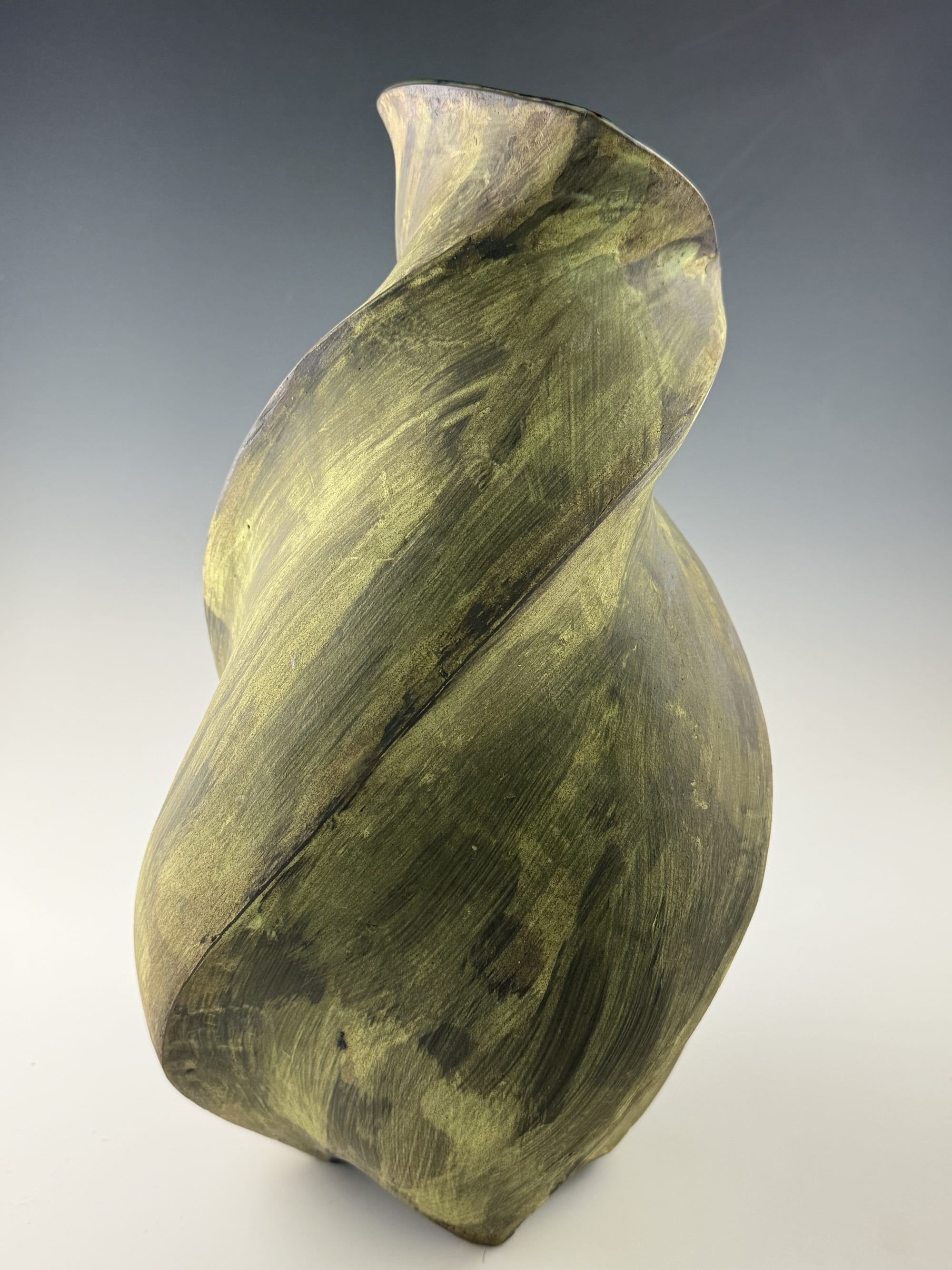
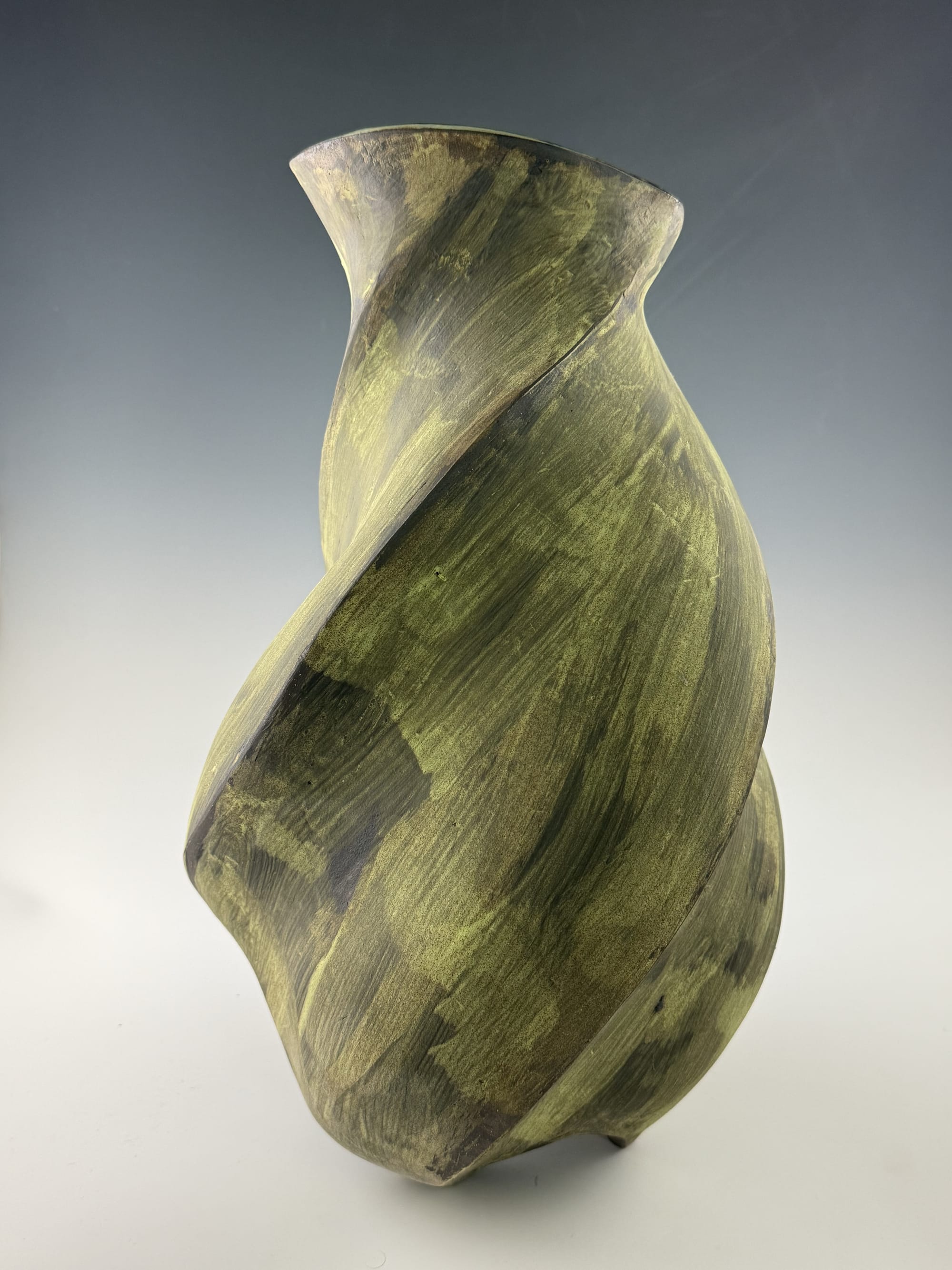
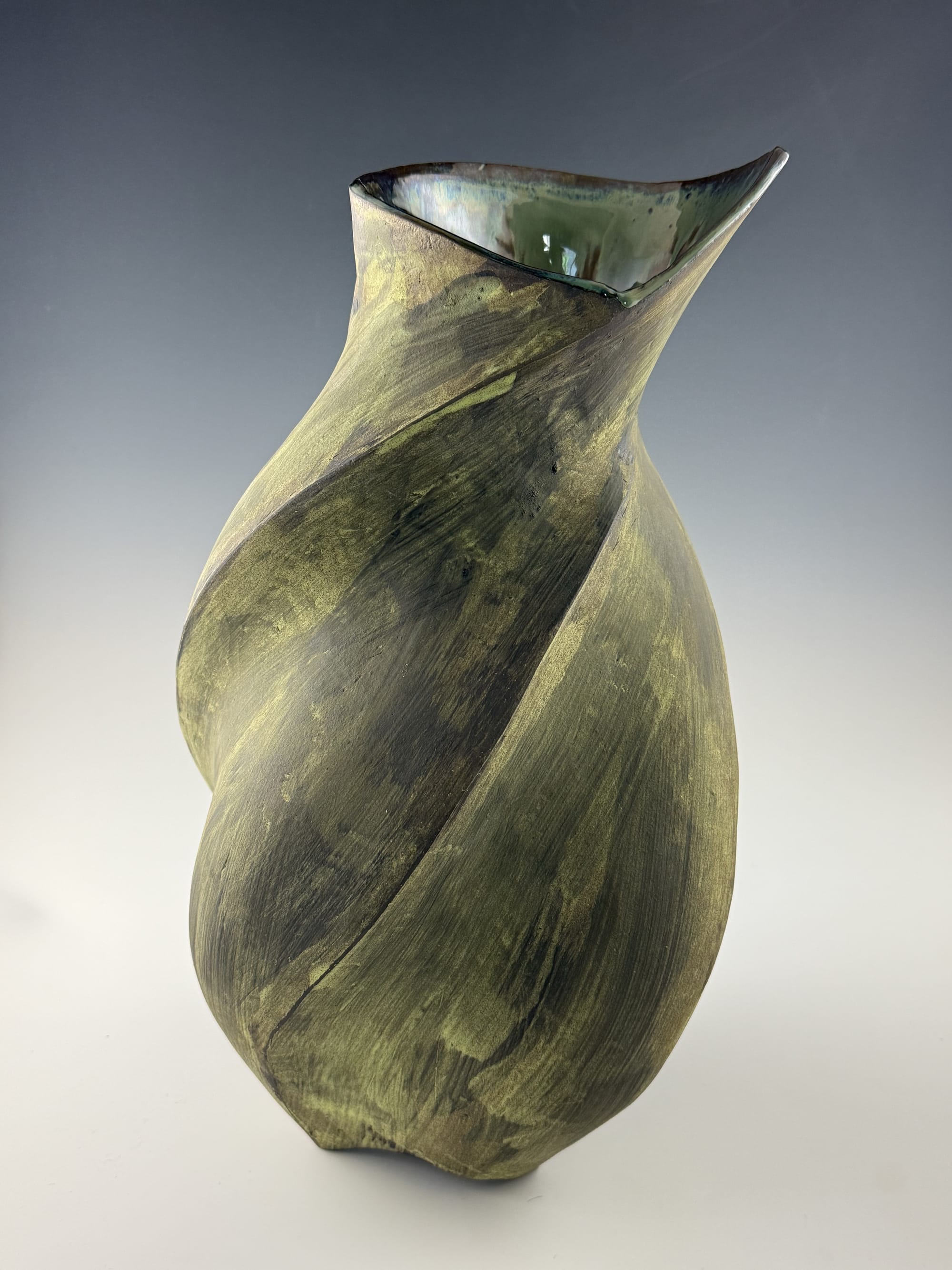
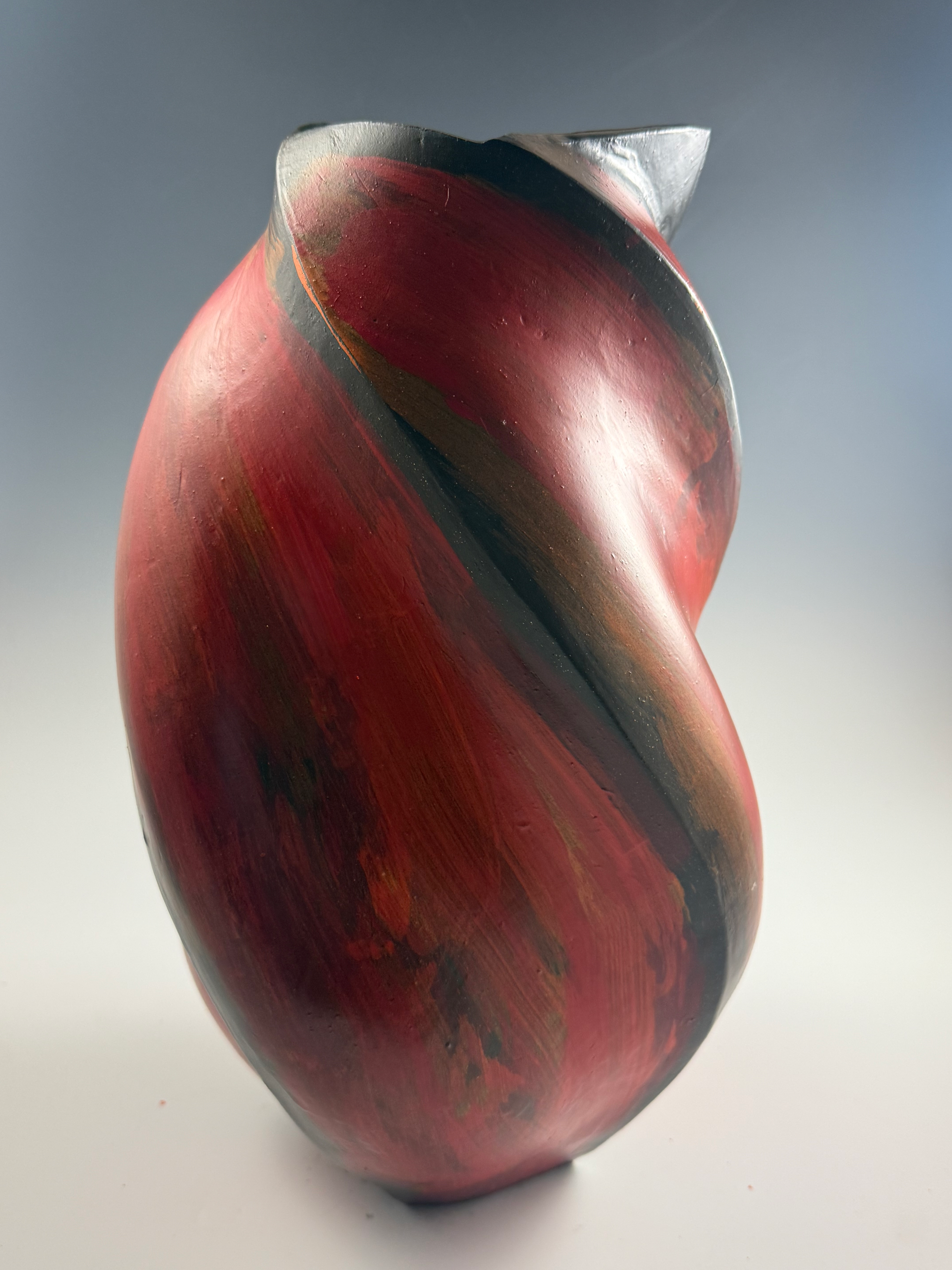
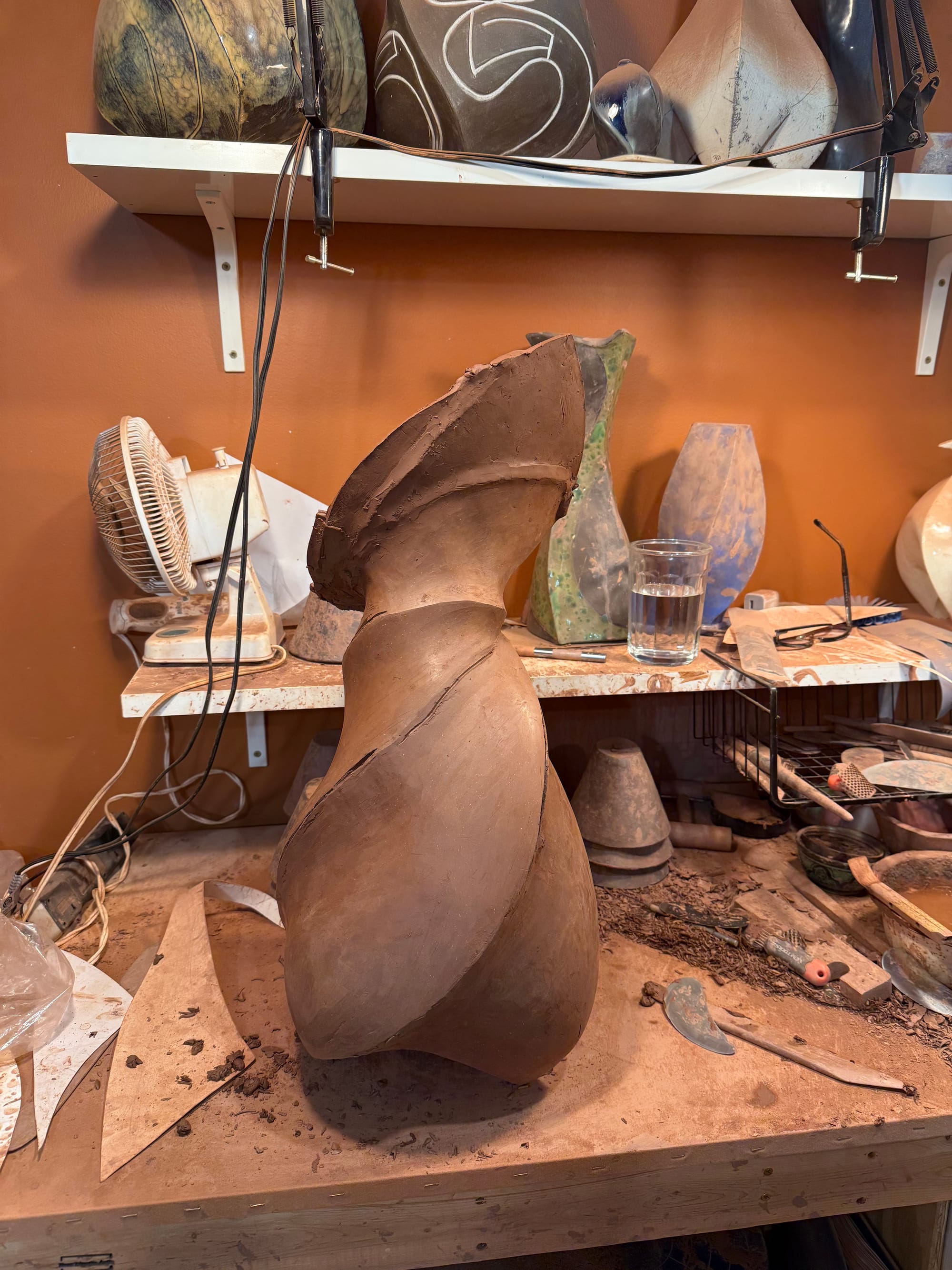
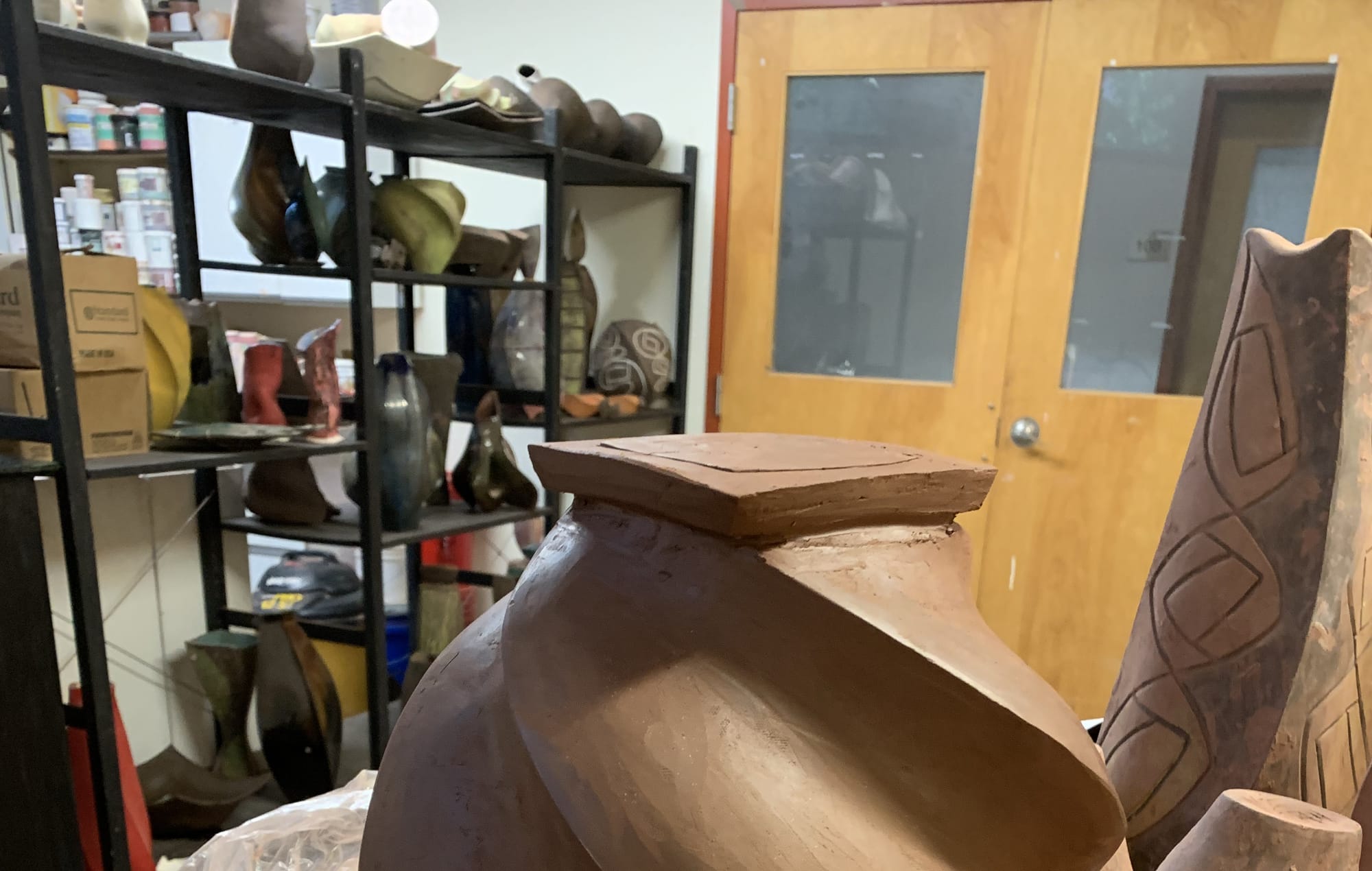
Peter Cunicelli is a Philadelphia artist who has been working with clay since 2000. As a student at The Clay Studio, he discovered hand-built vessels and soon began rolling out slabs of his own. During this time, he developed forms by studying traditional thrown forms. He has experimented with a variety of glazes and techniques and has worked with porcelain, paper clay, Cassius Bassalt and a variety of other stonewares. His current studio practice builds and expands upon the desire to create forms that push boundaries, and are balanced between the dramatic and the refined.
Statement:
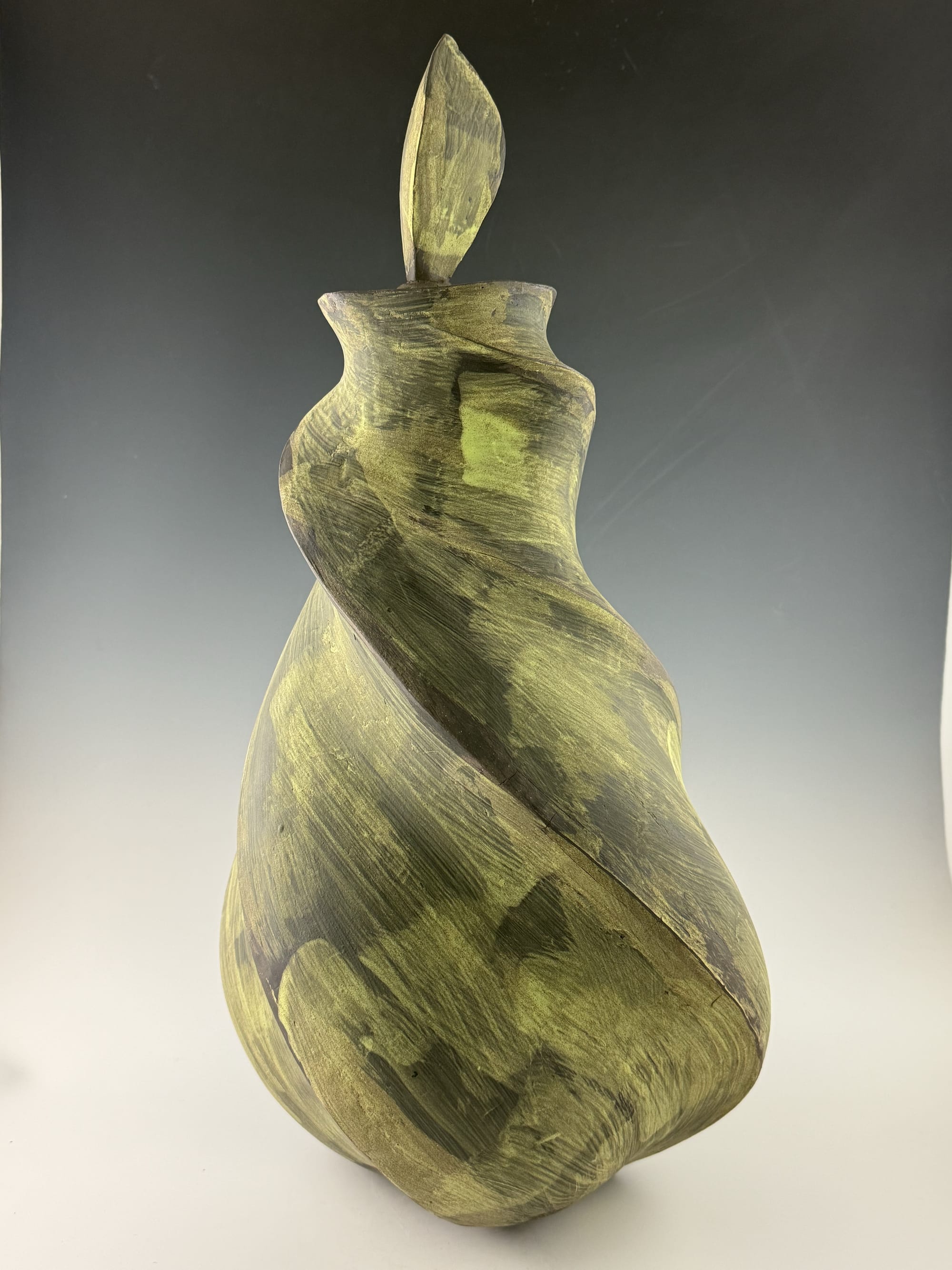
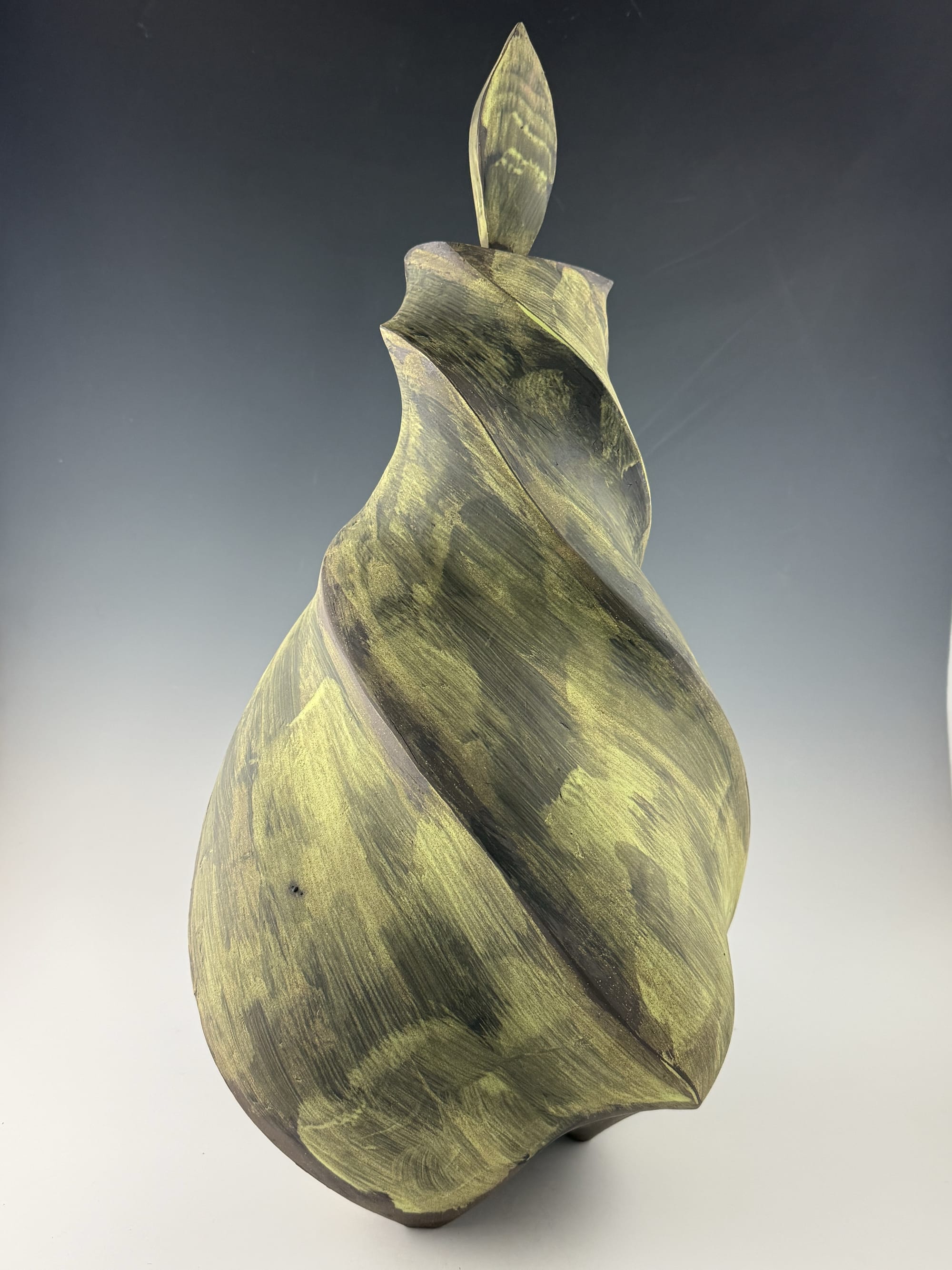
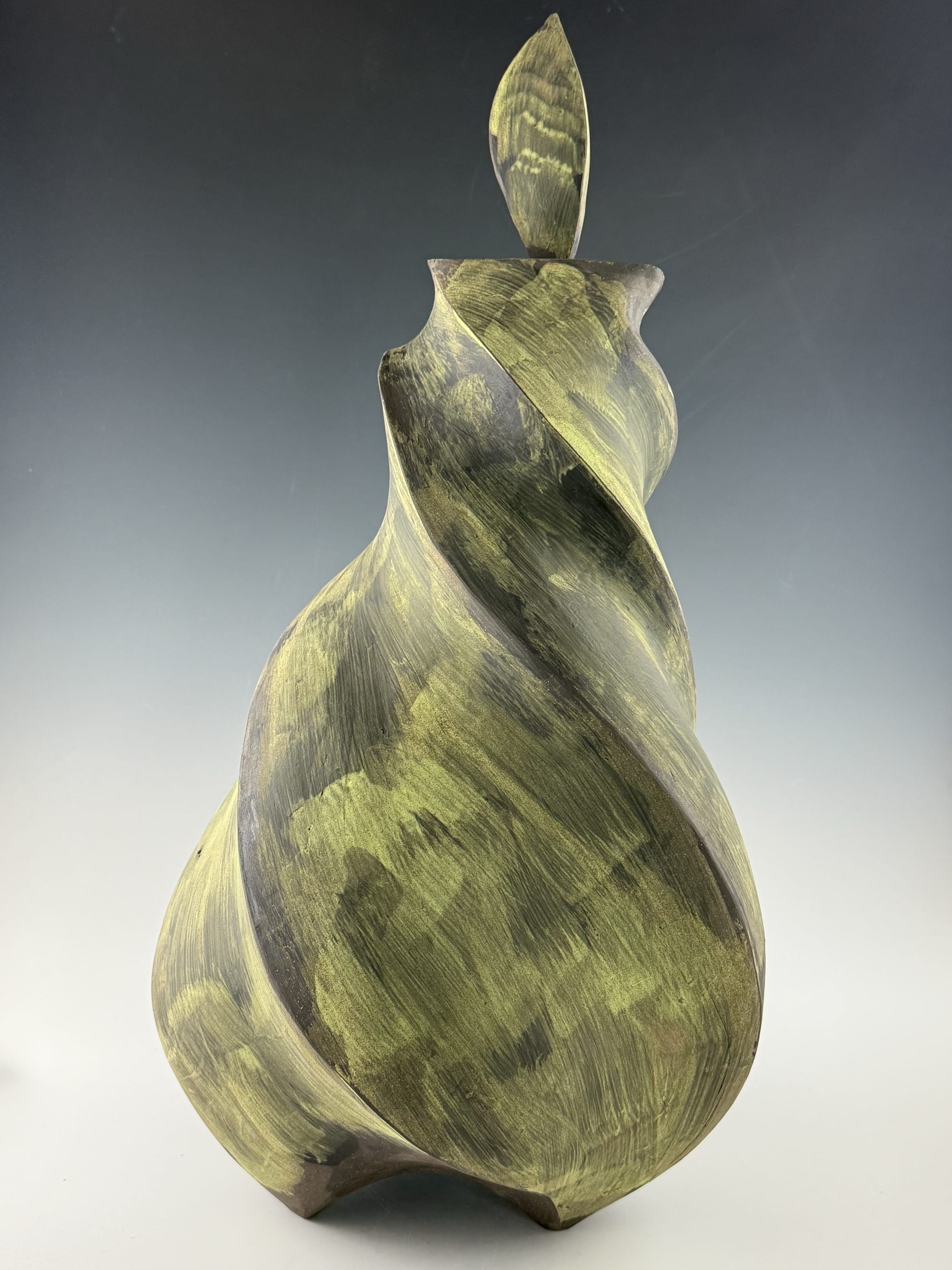
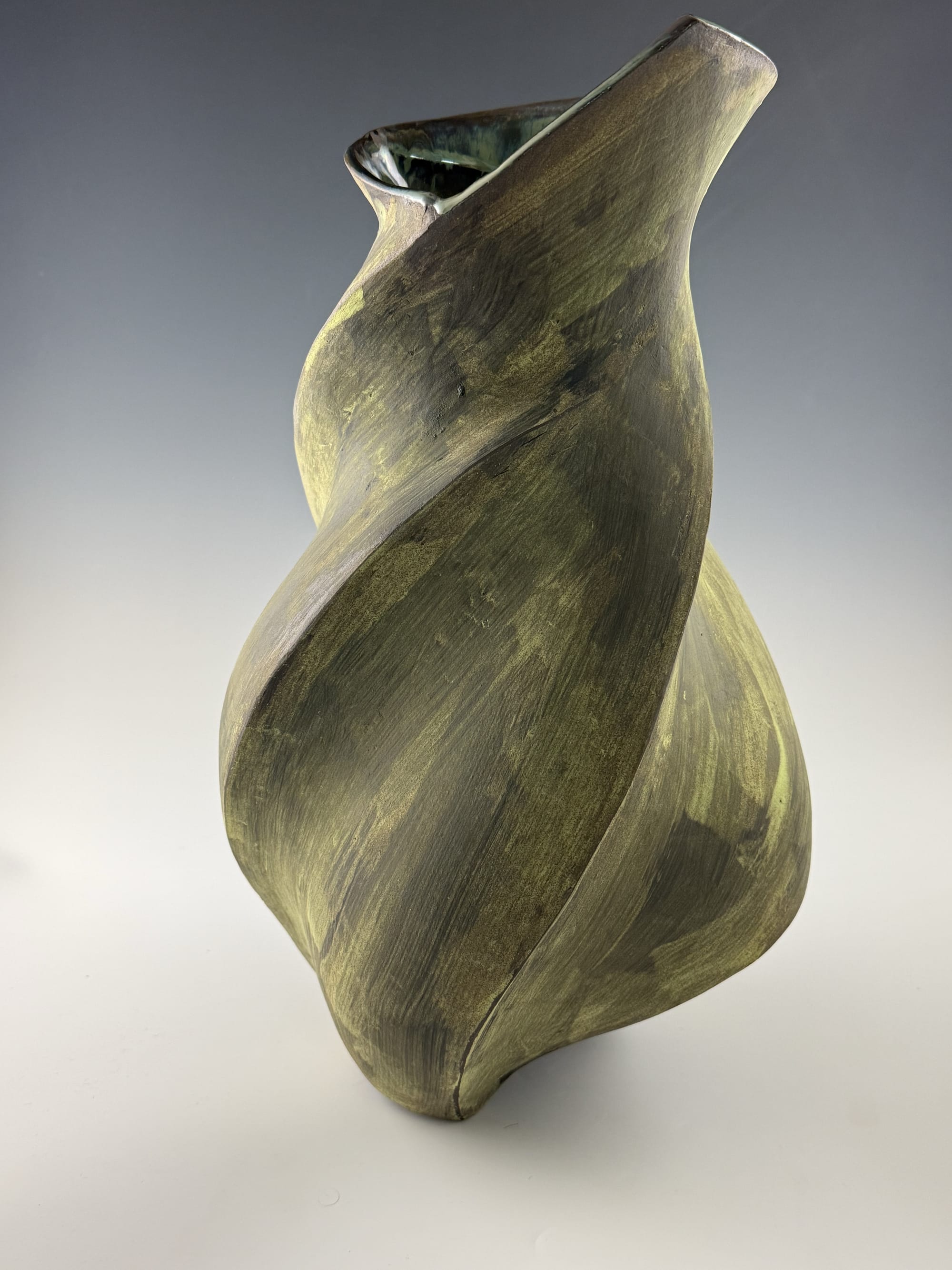
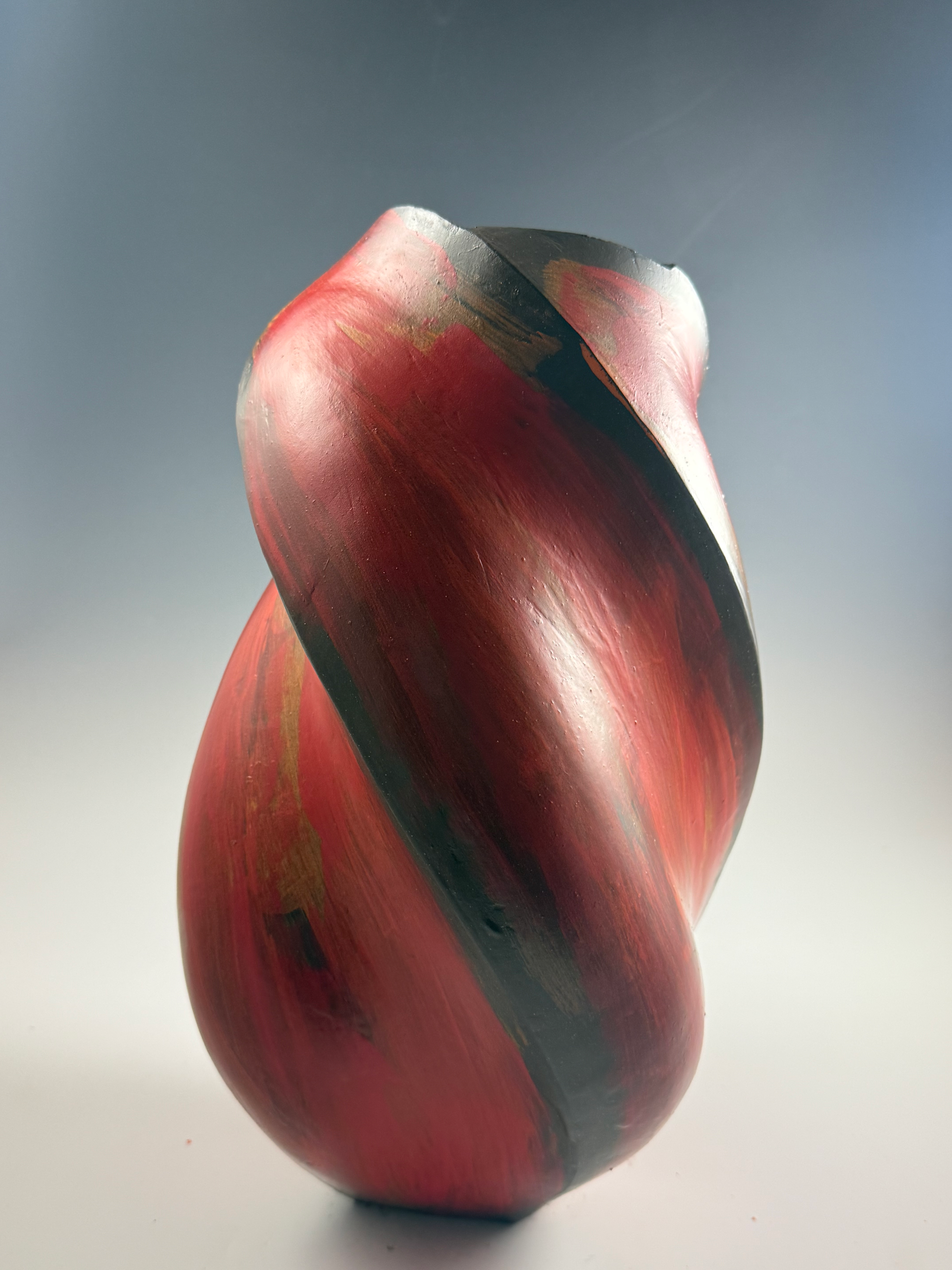
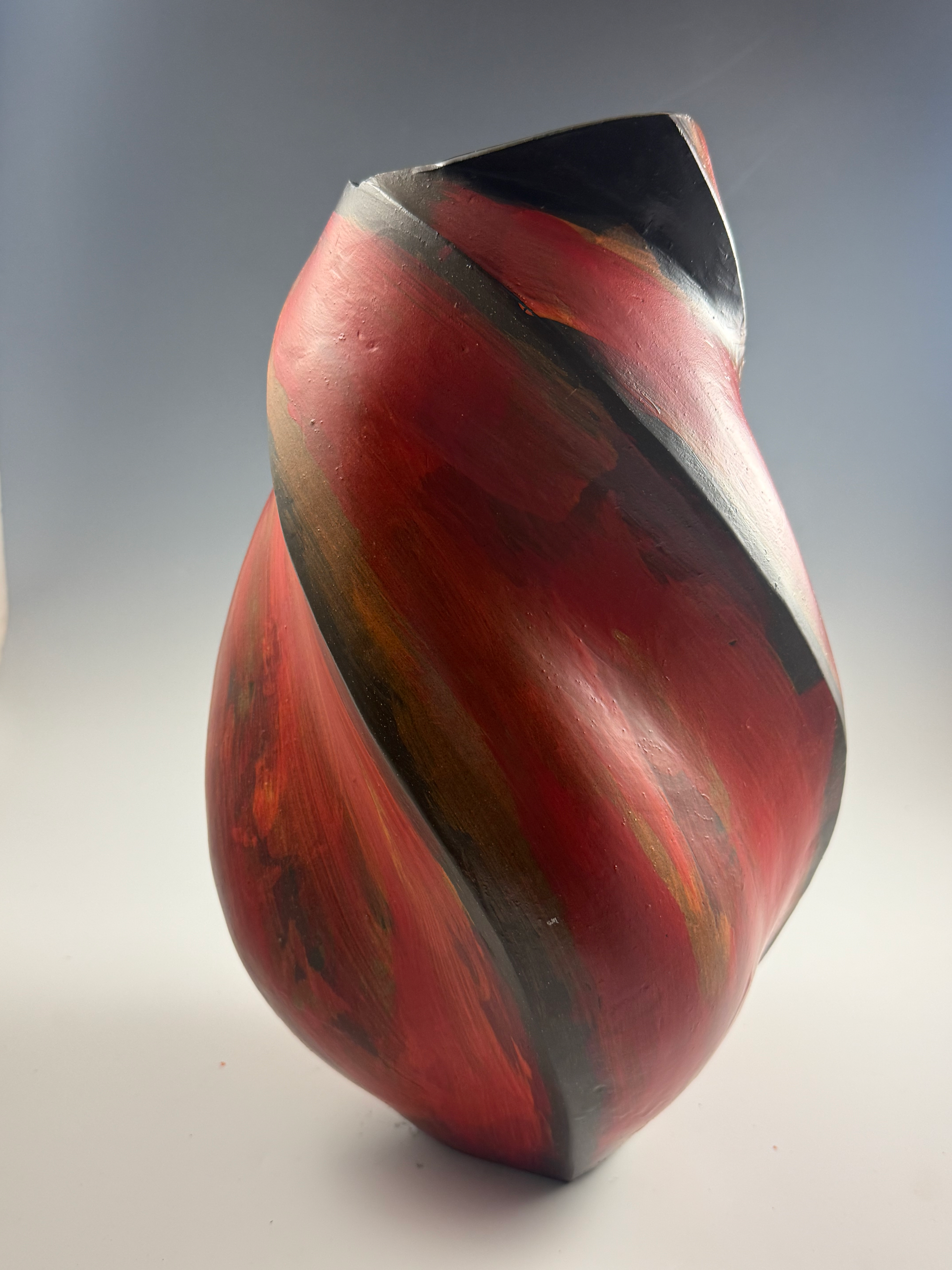
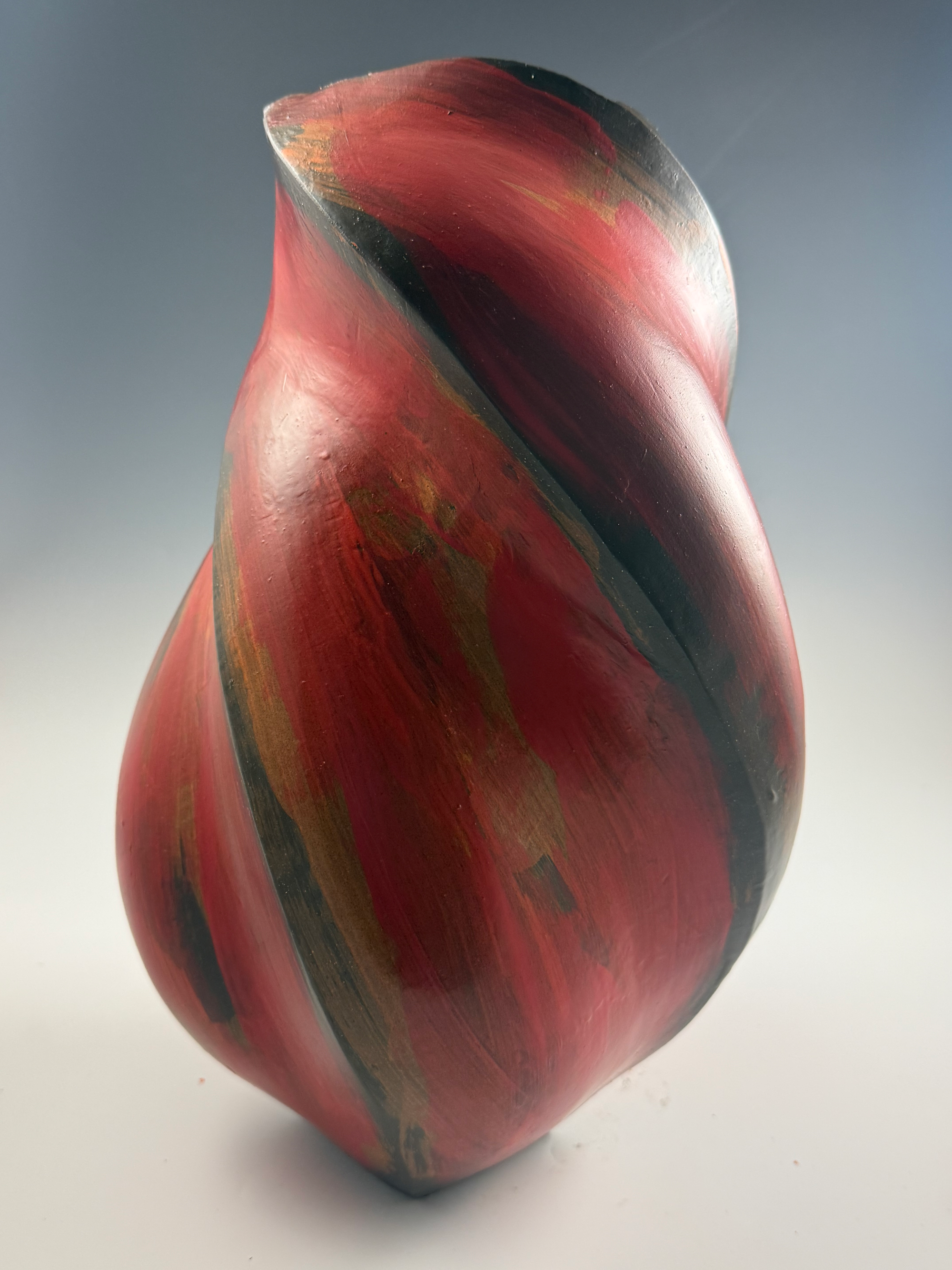
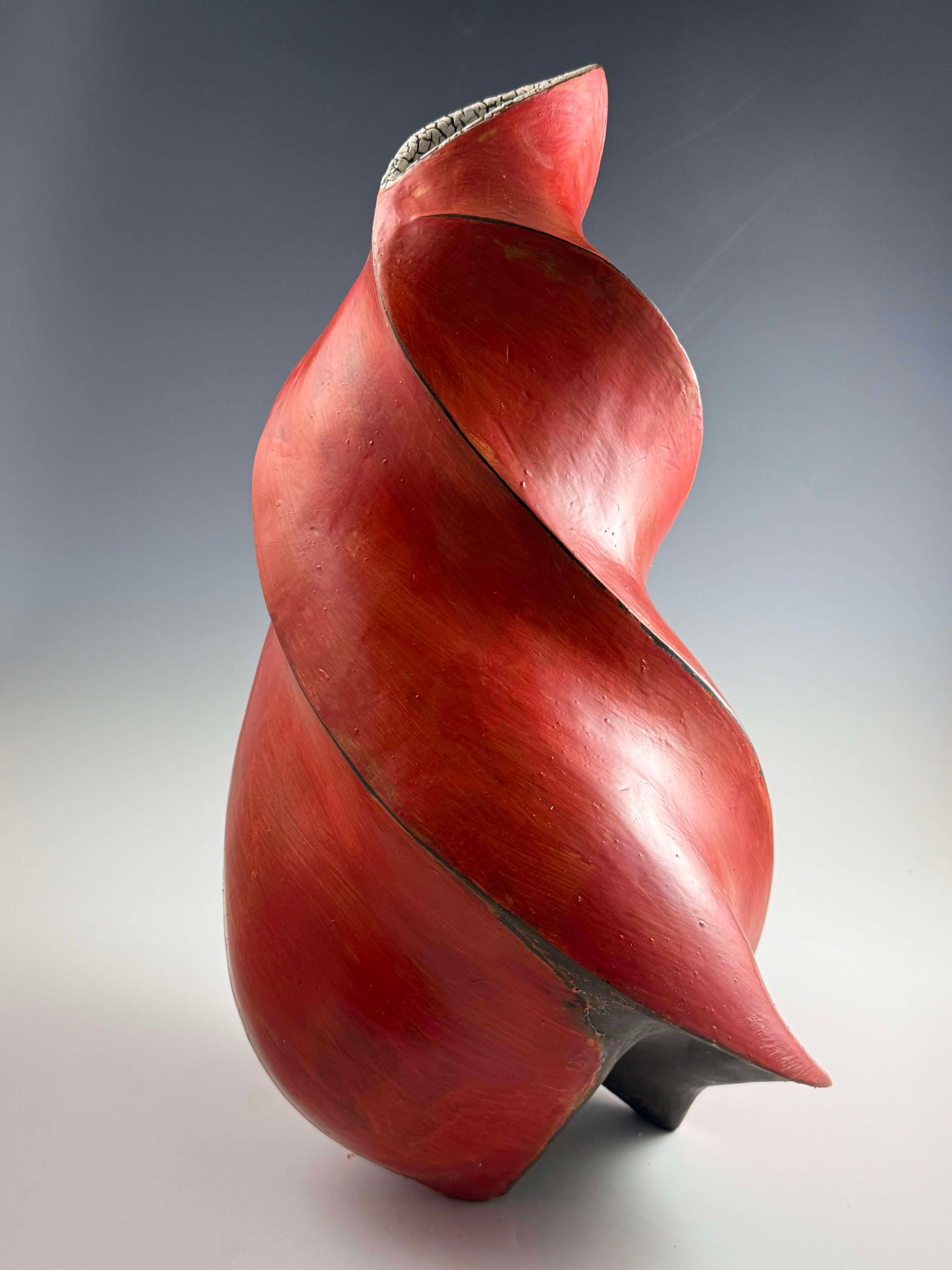
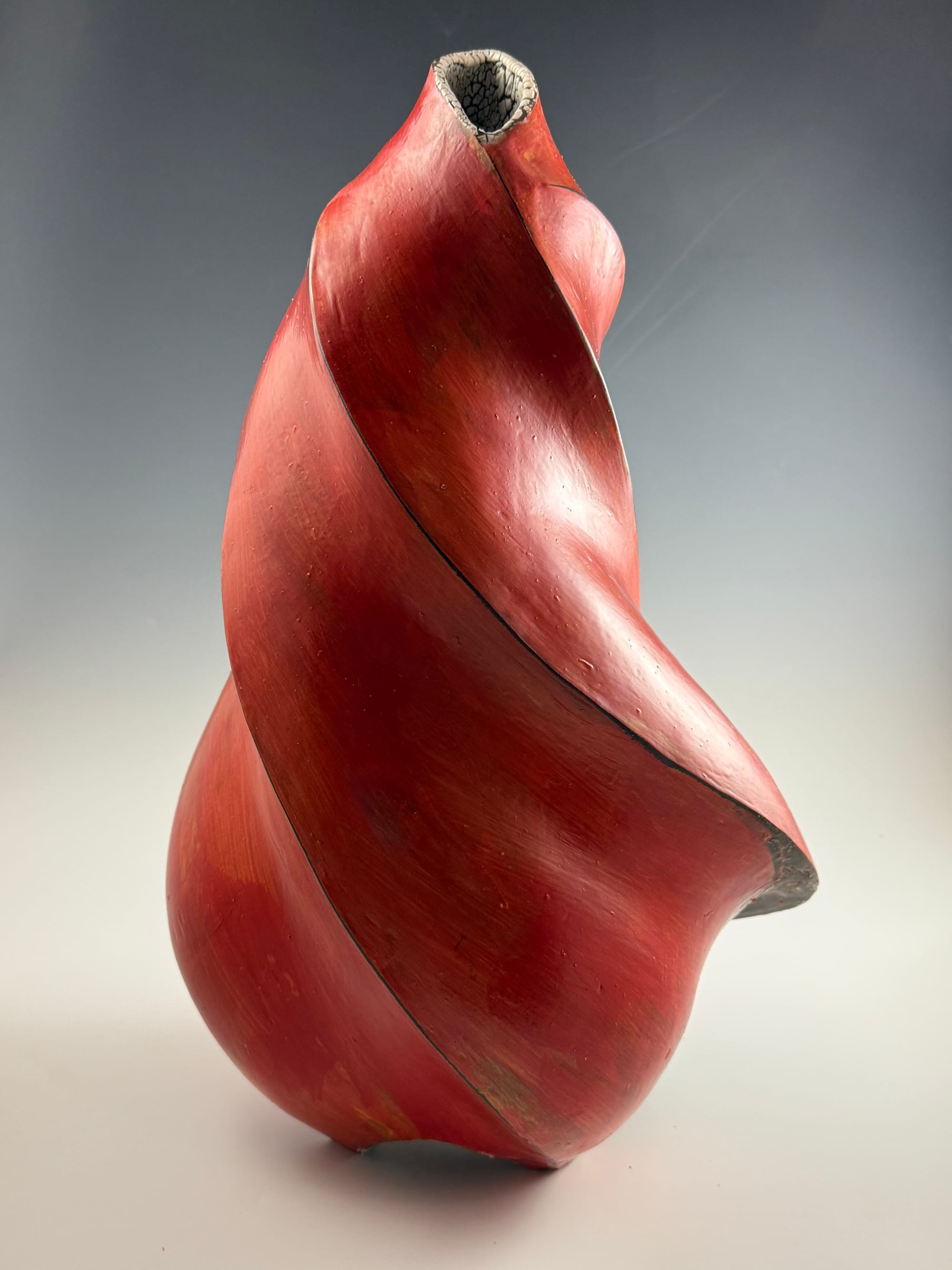
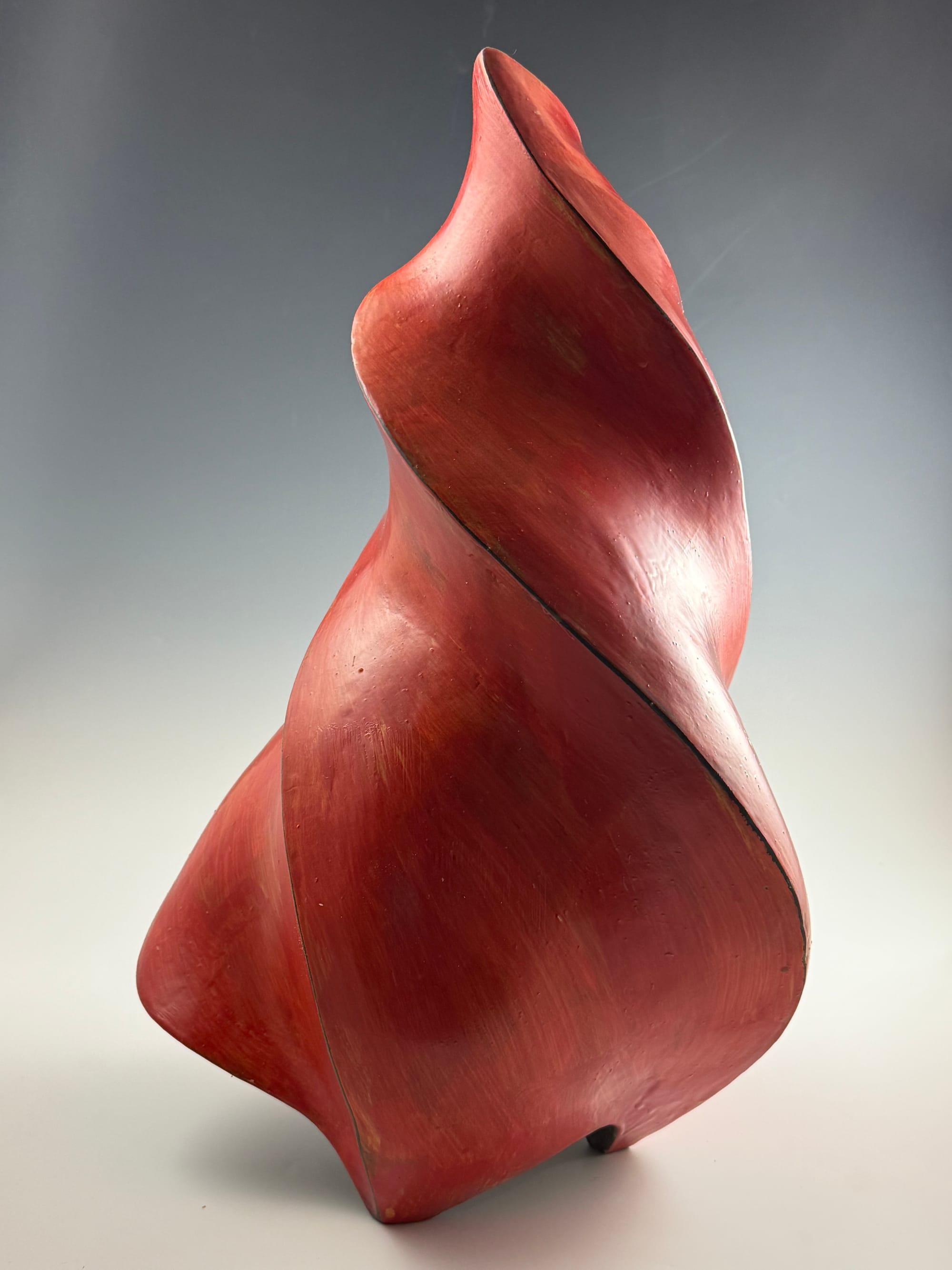
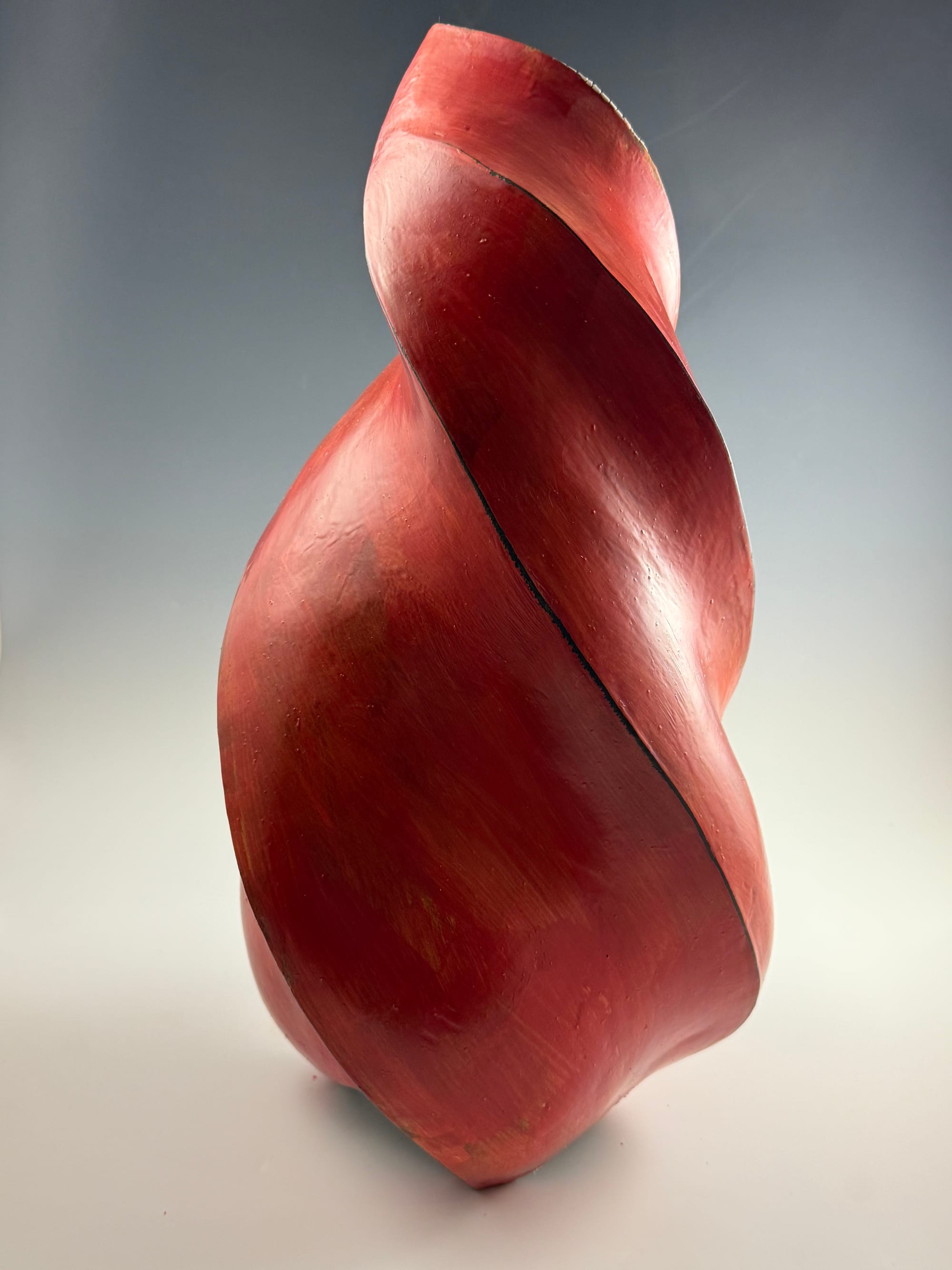
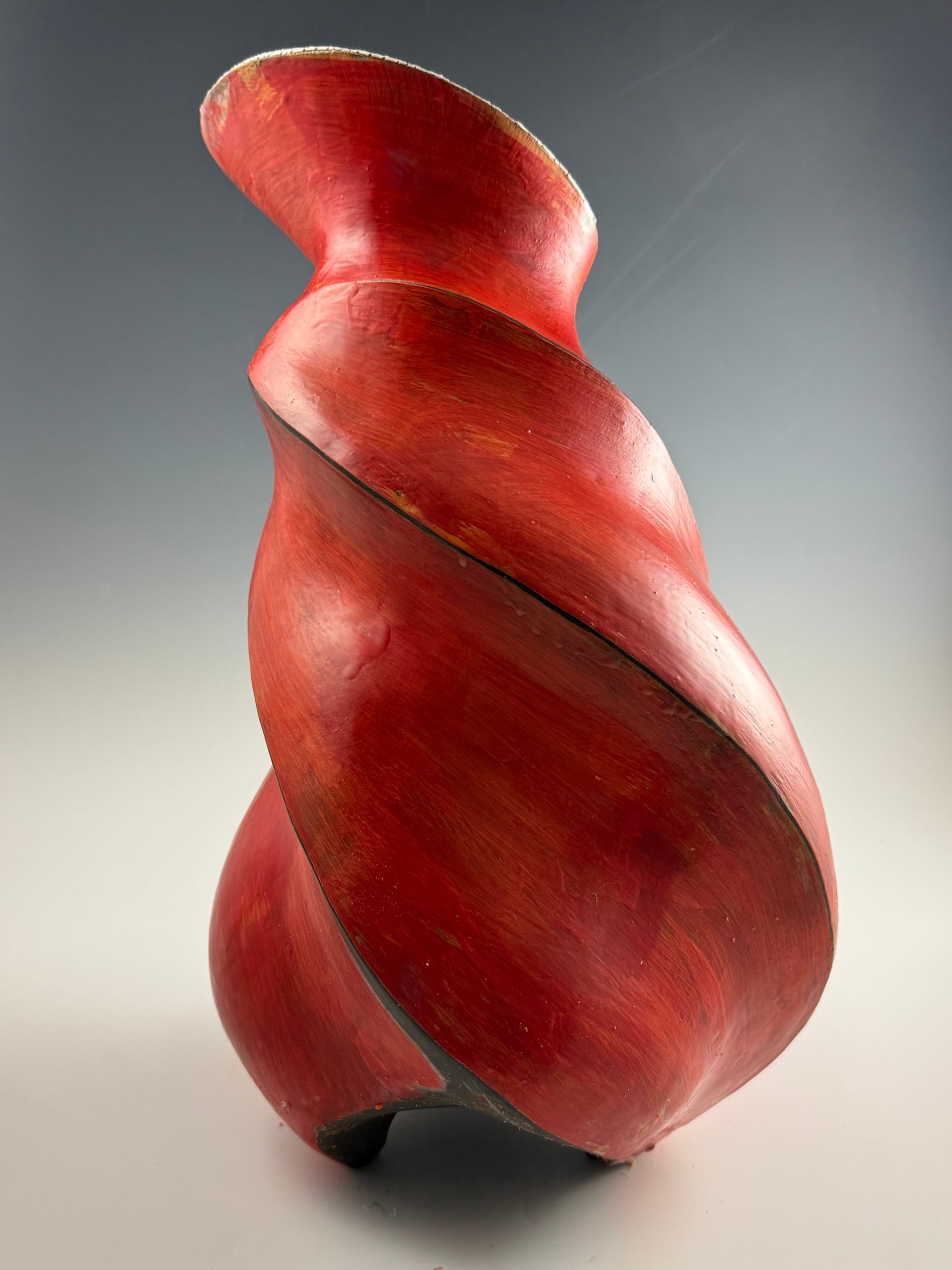
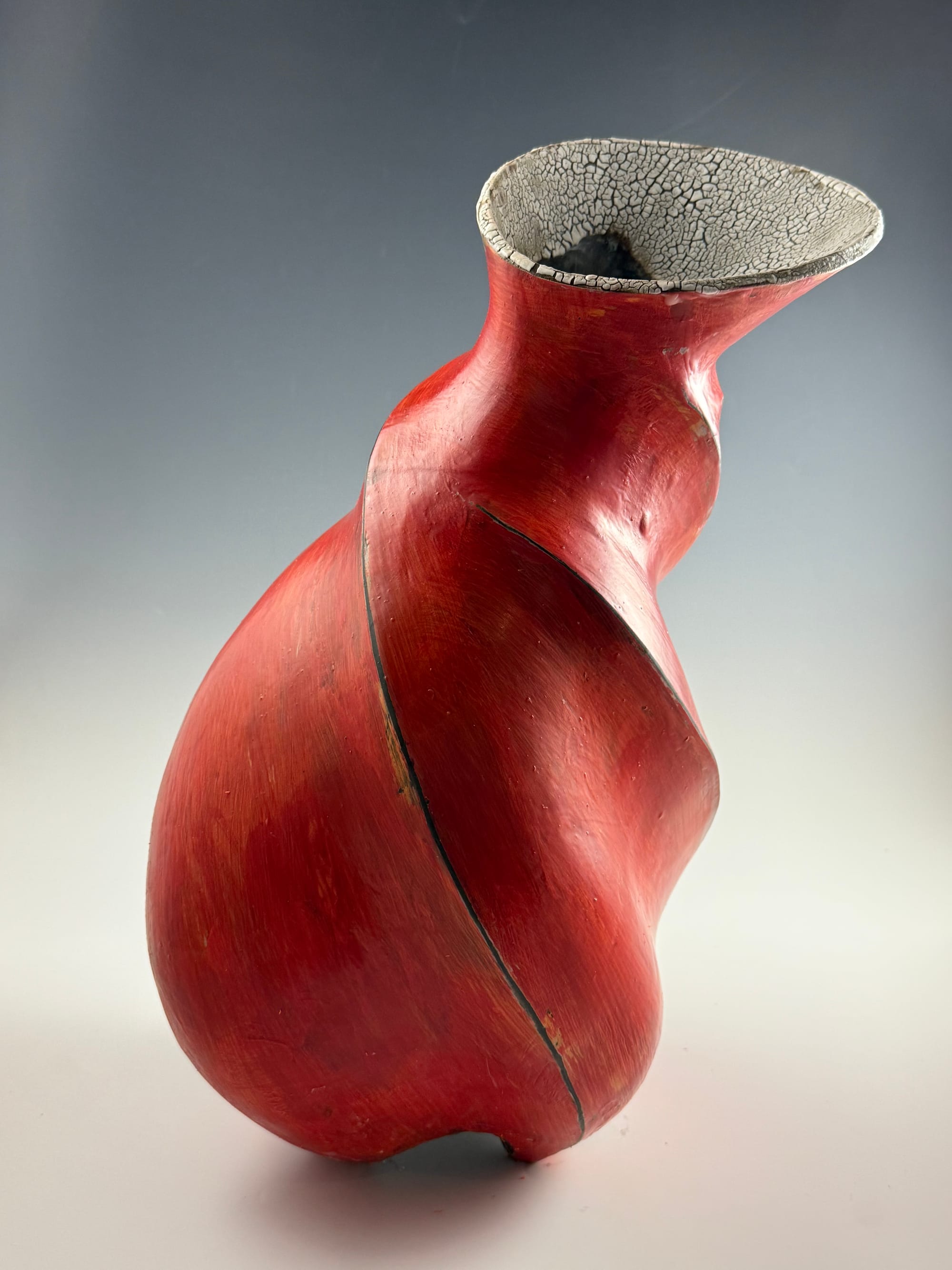
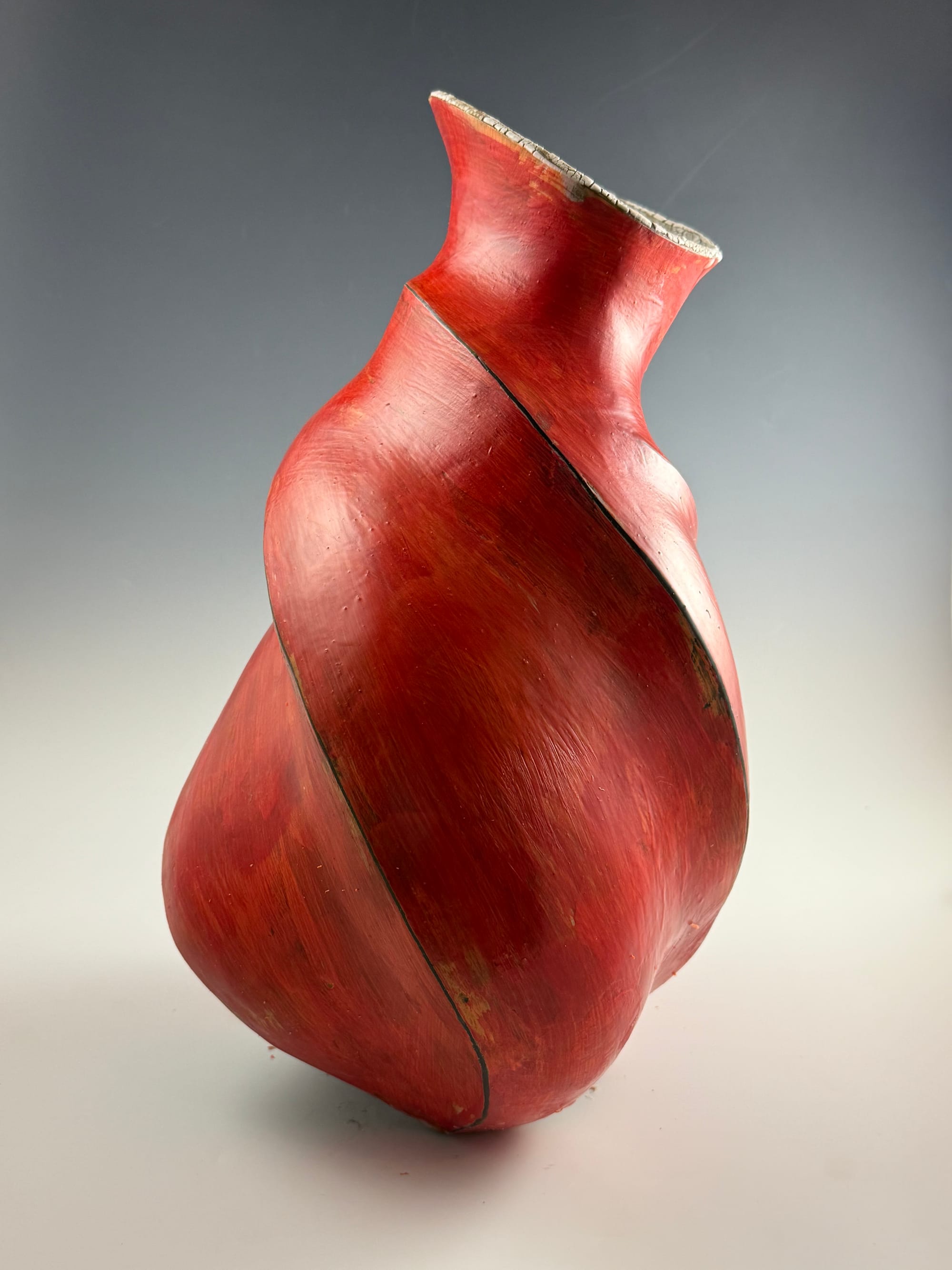
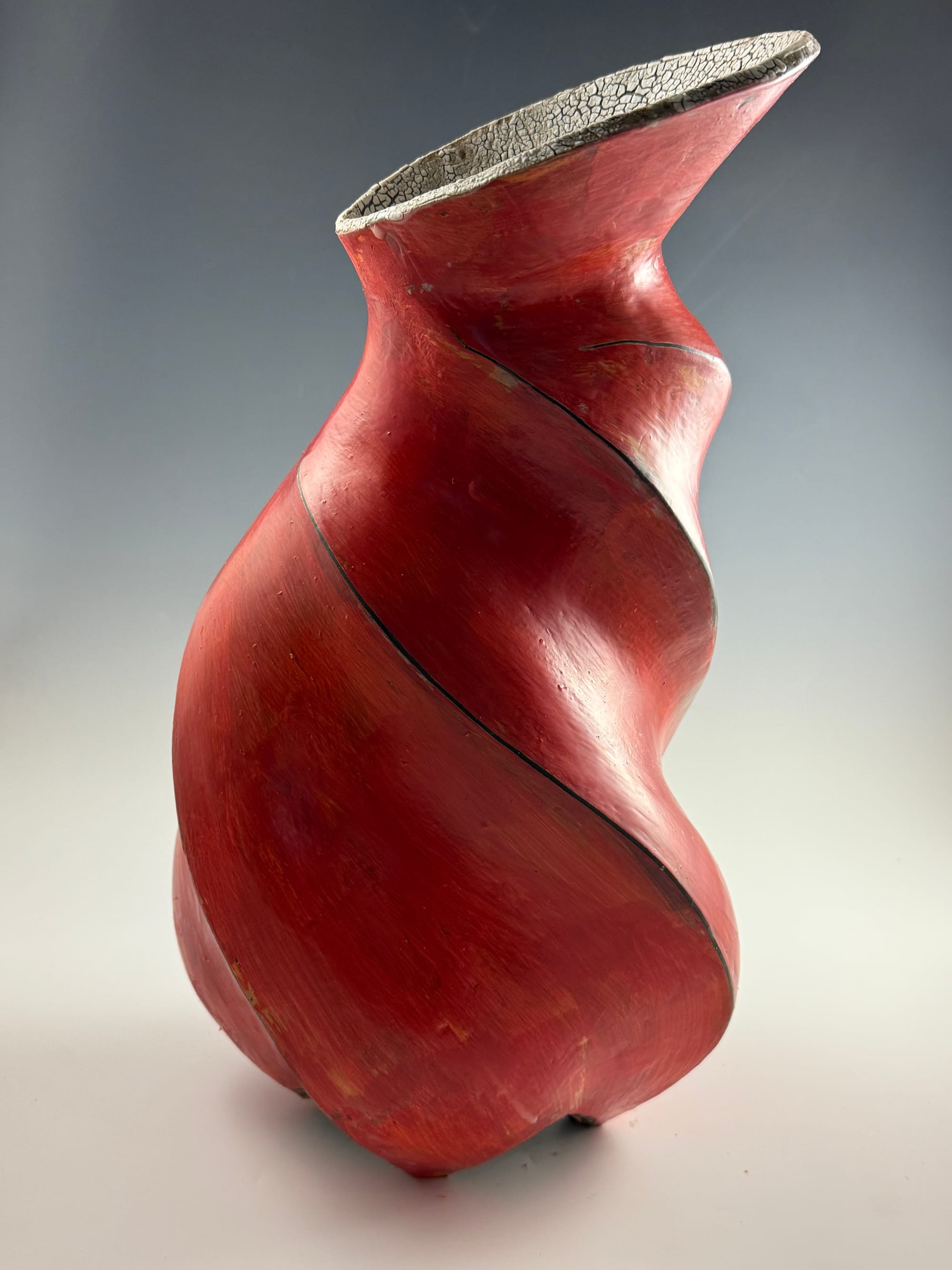
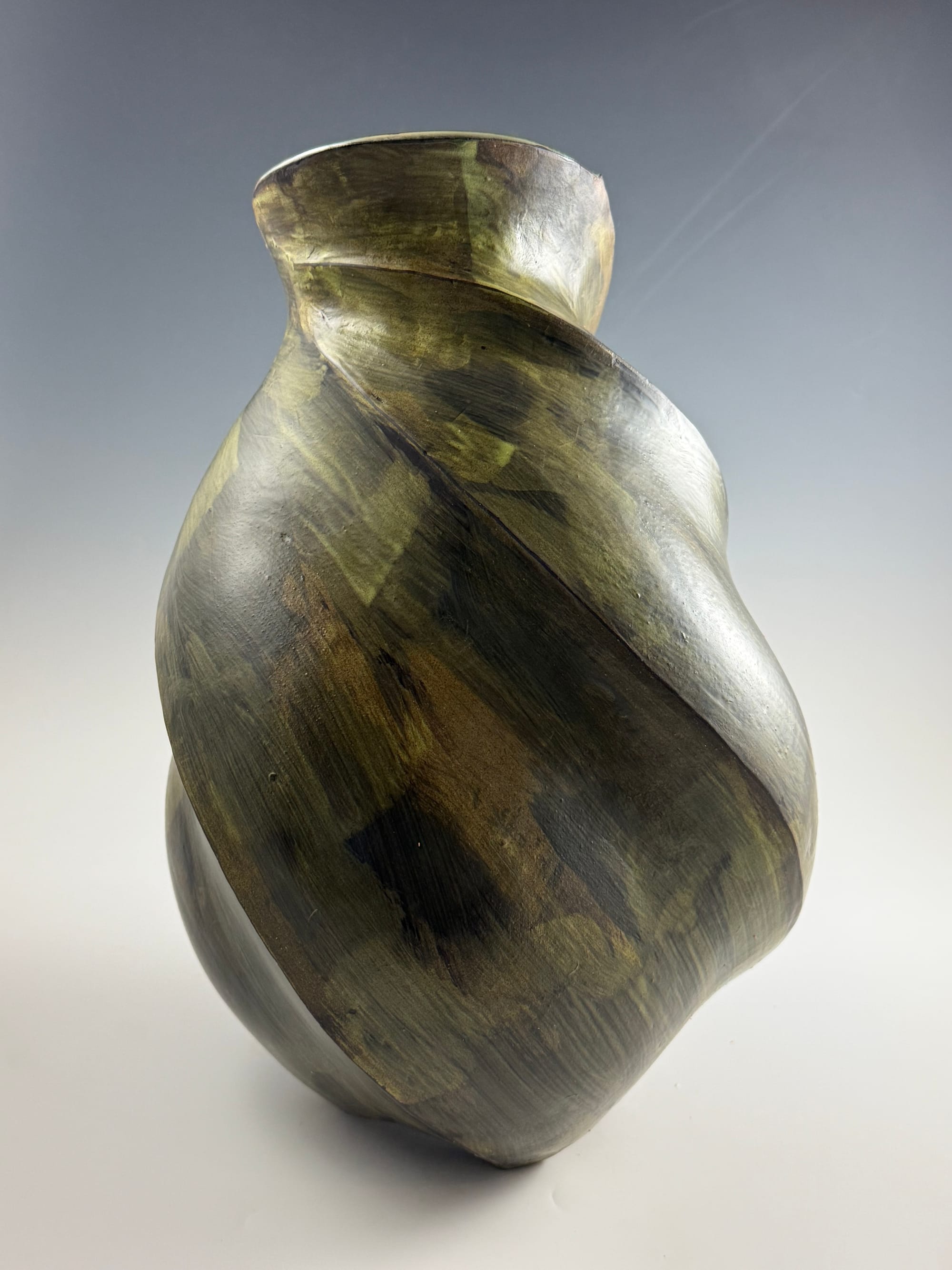
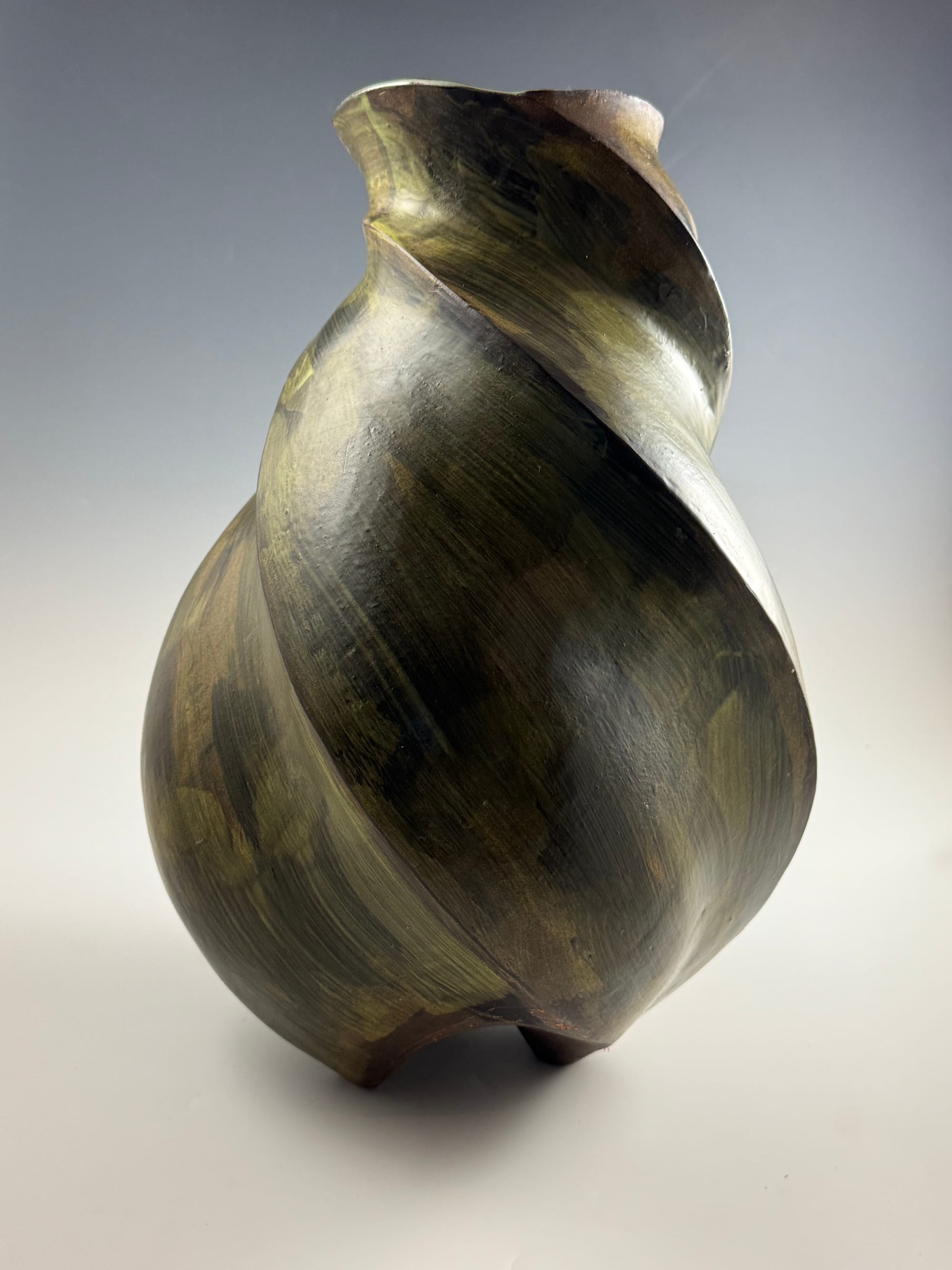
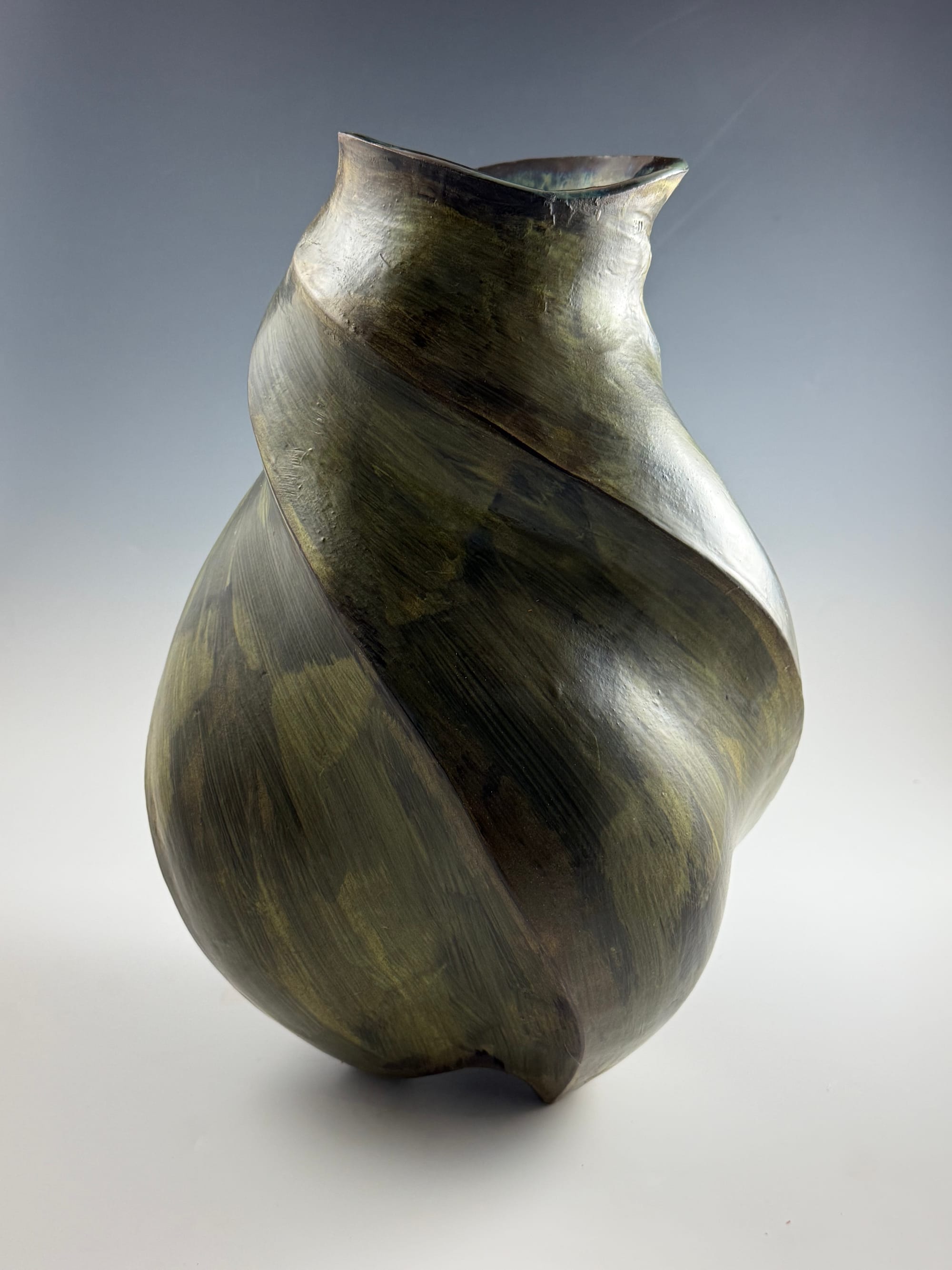
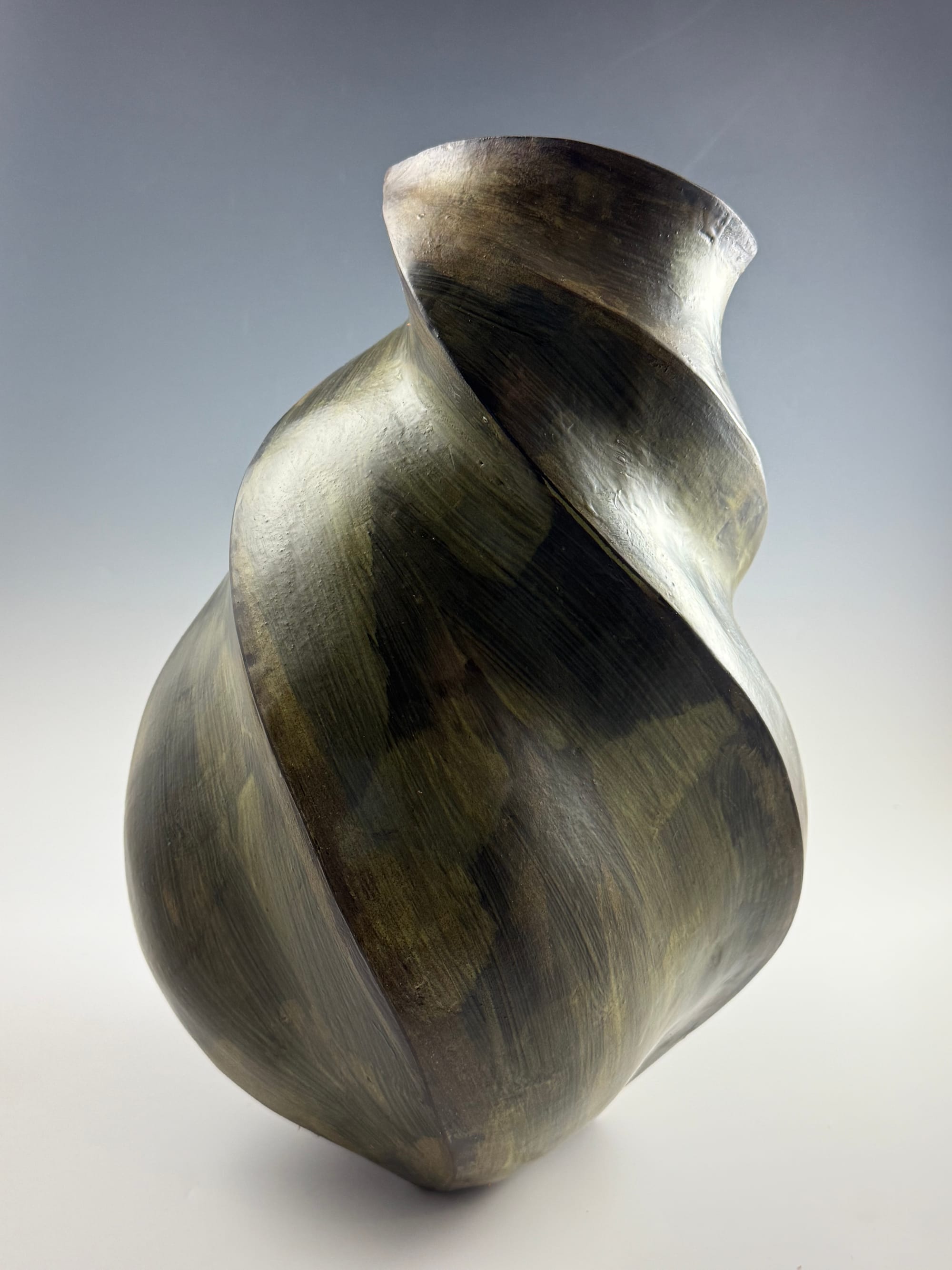
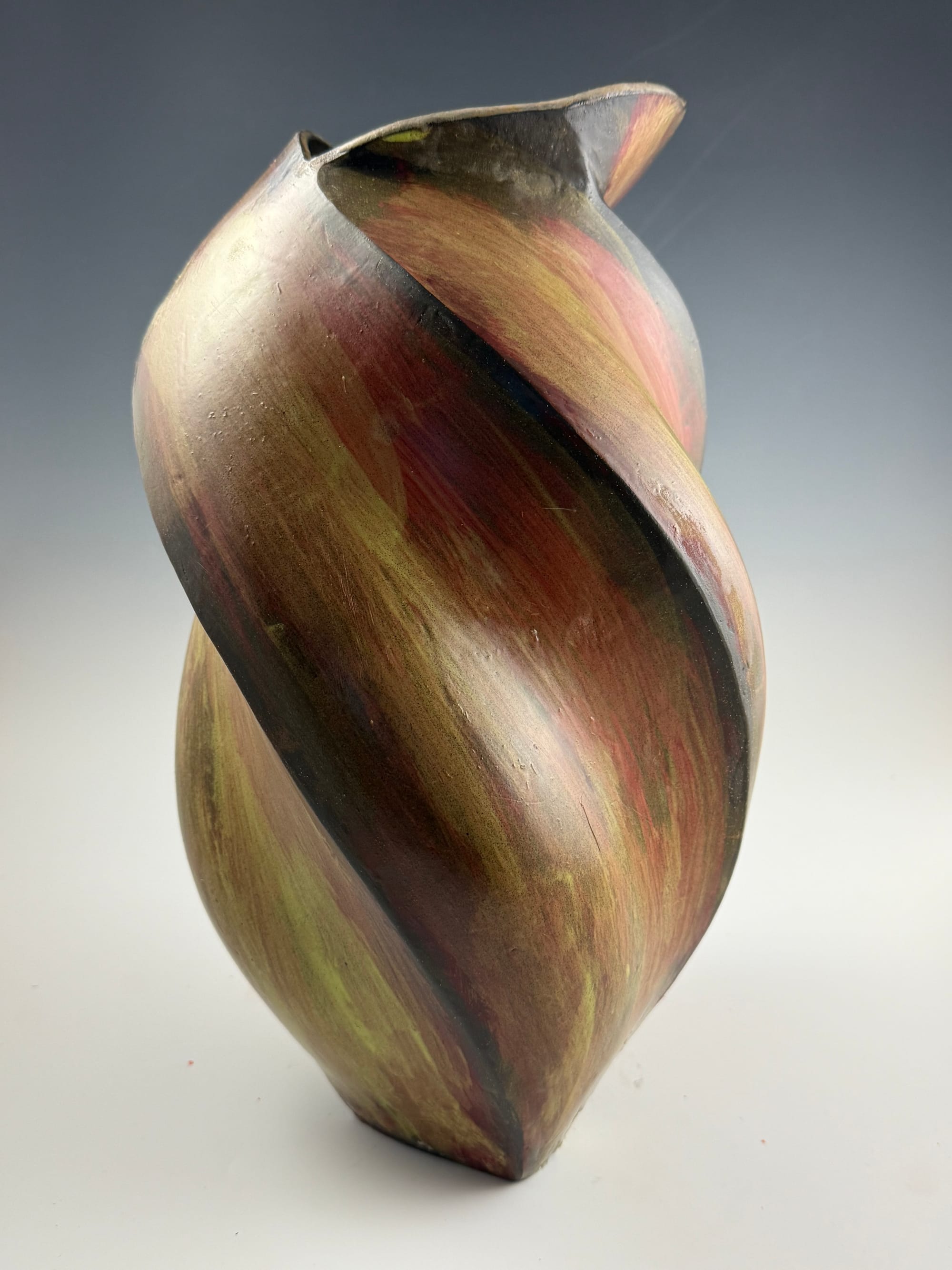
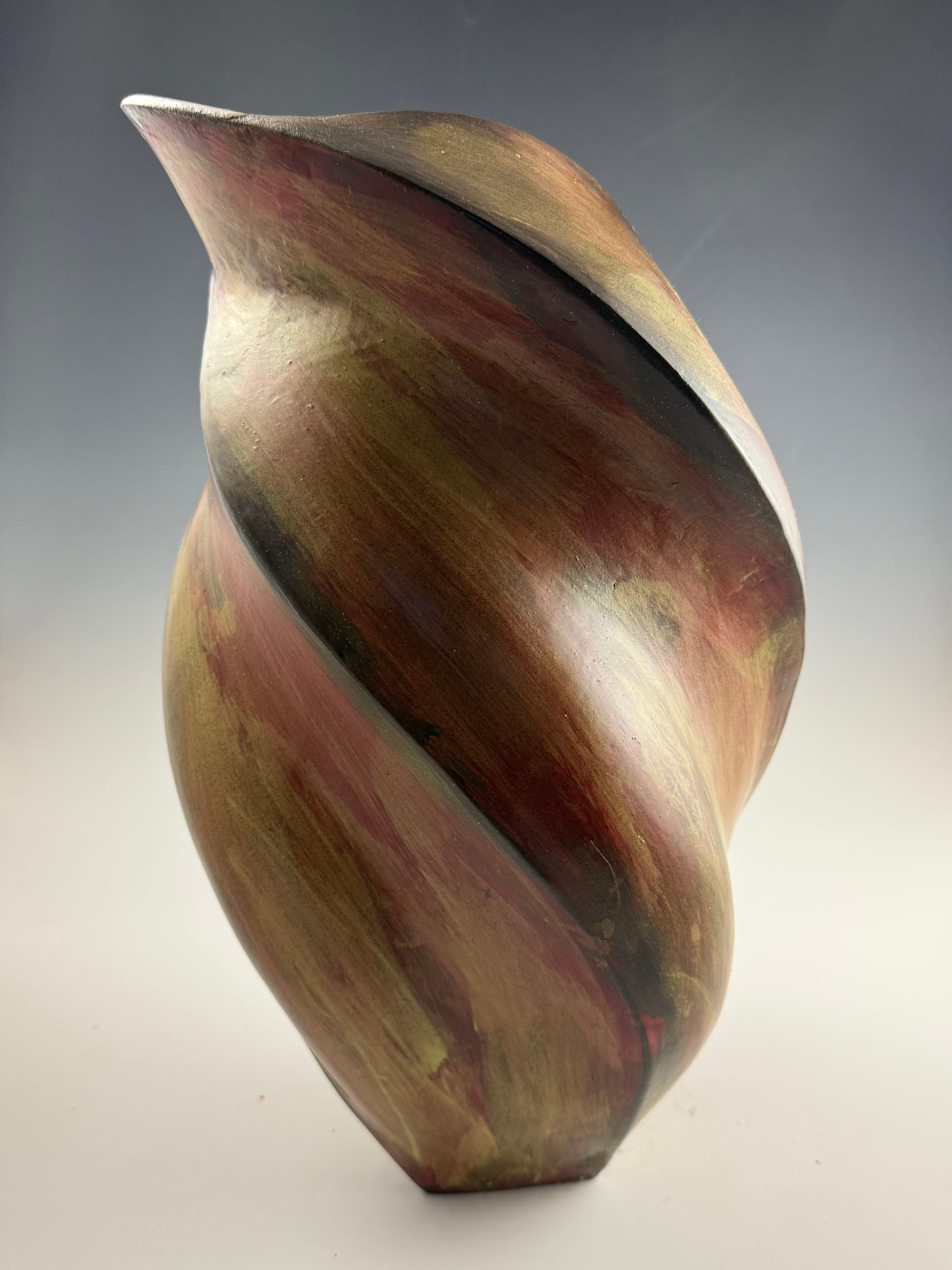
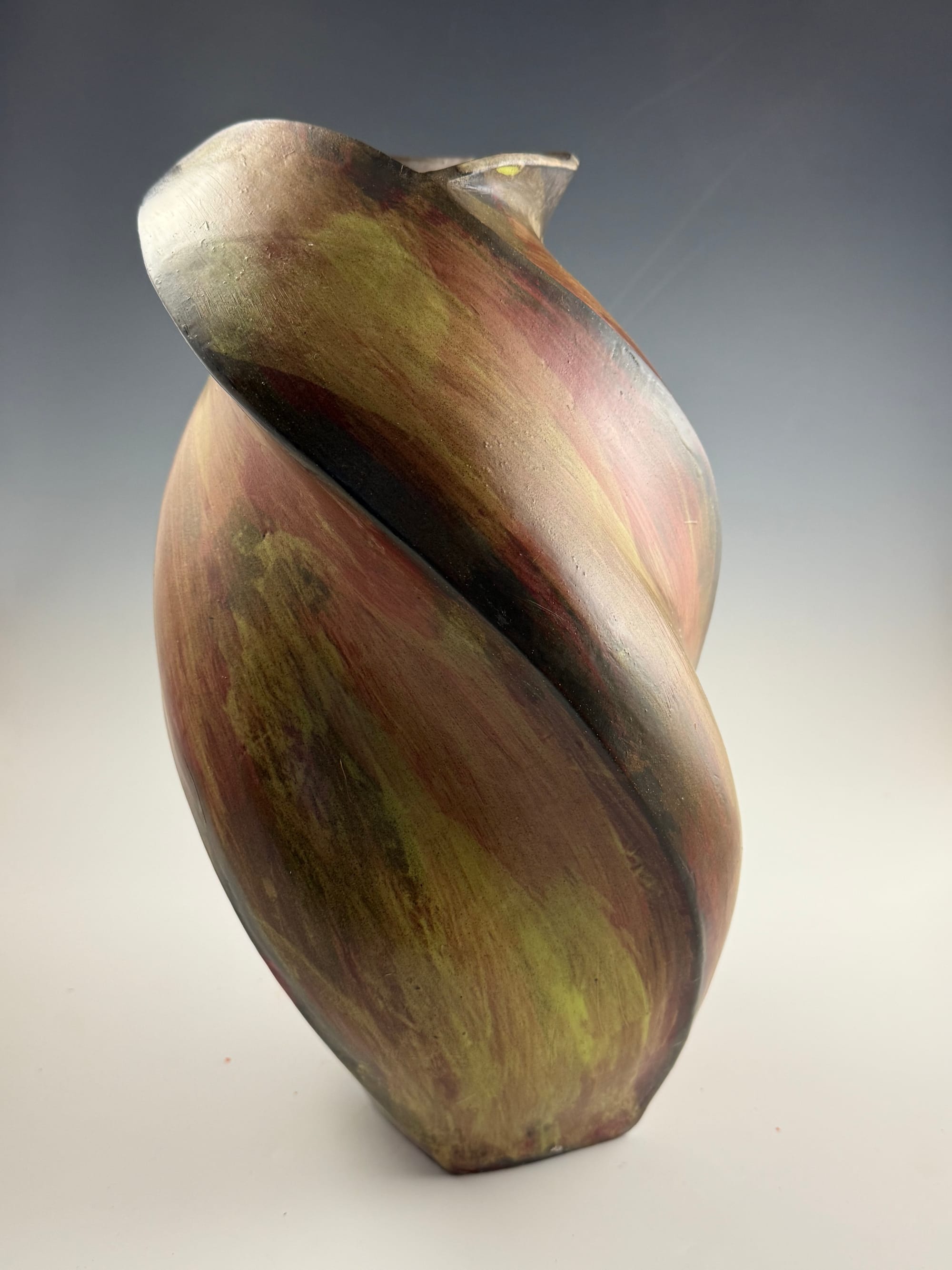
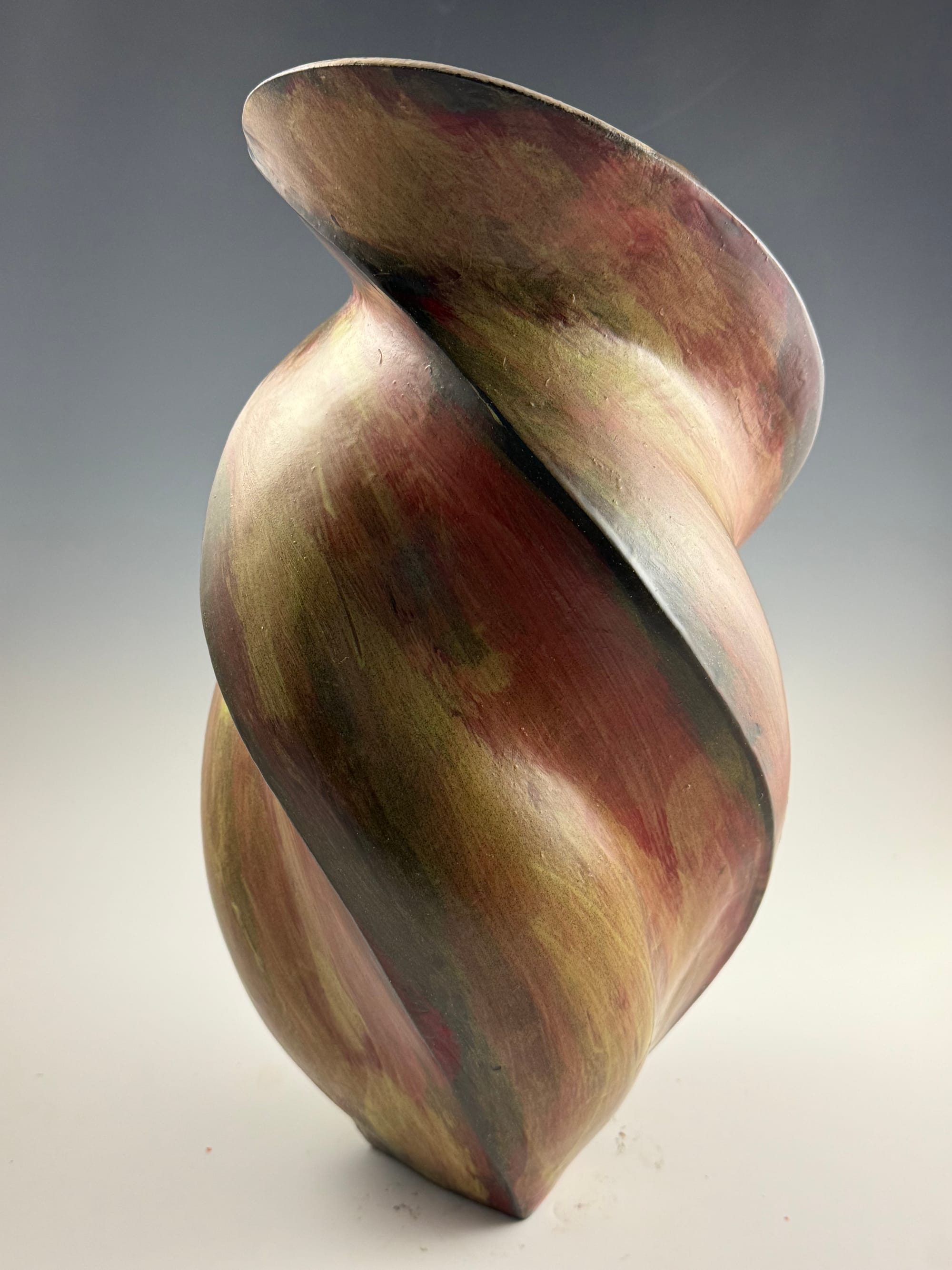
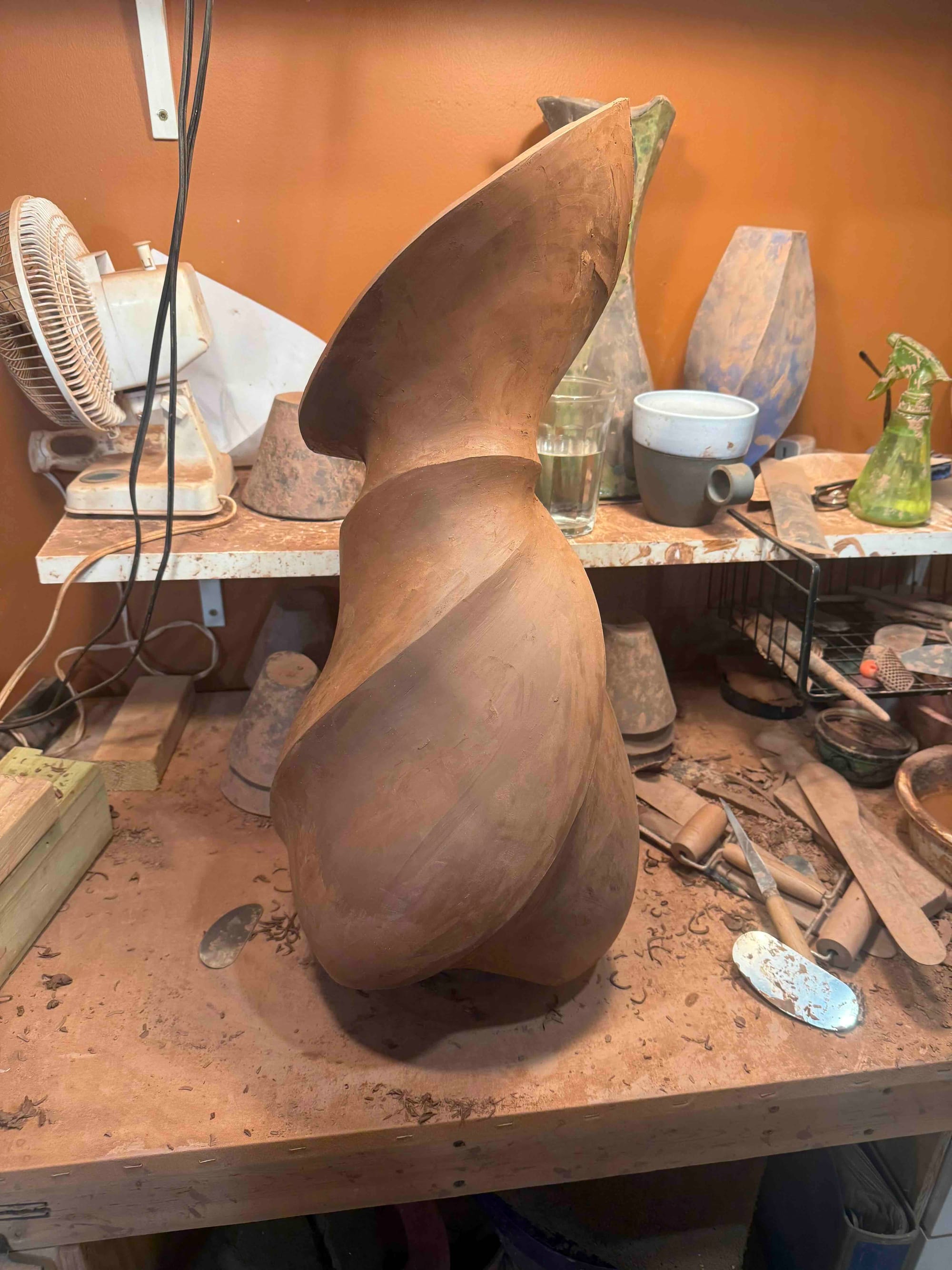
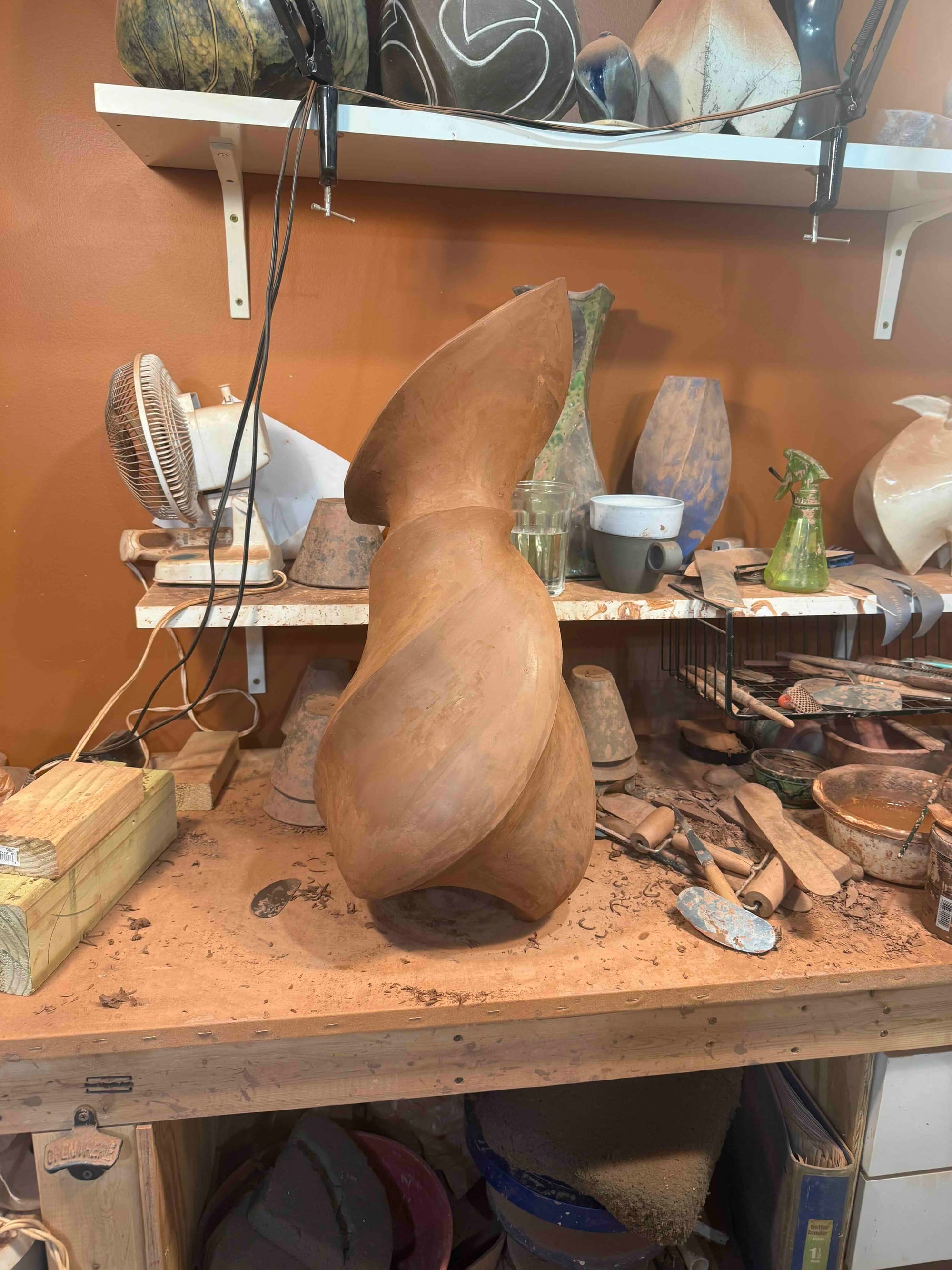
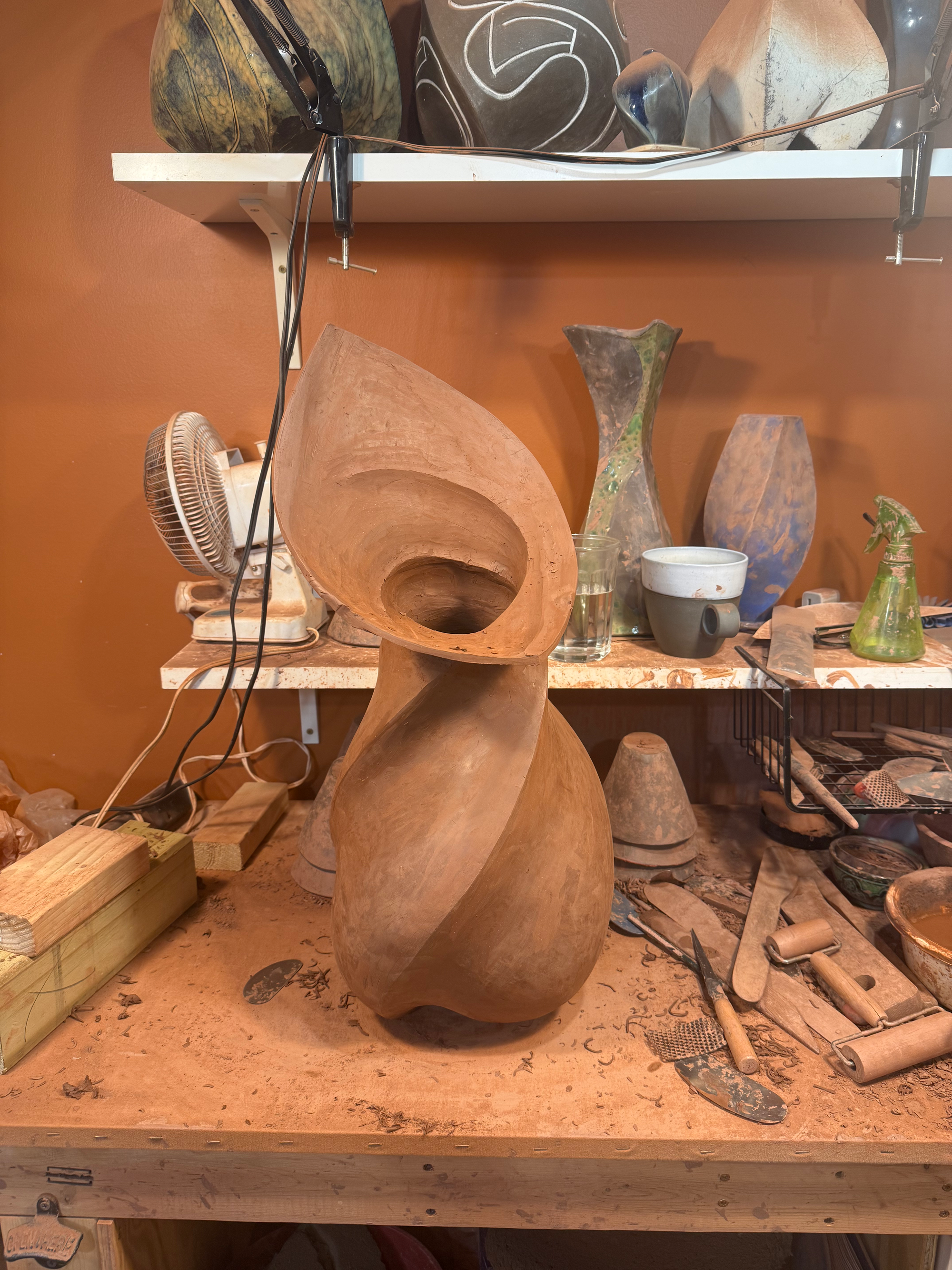
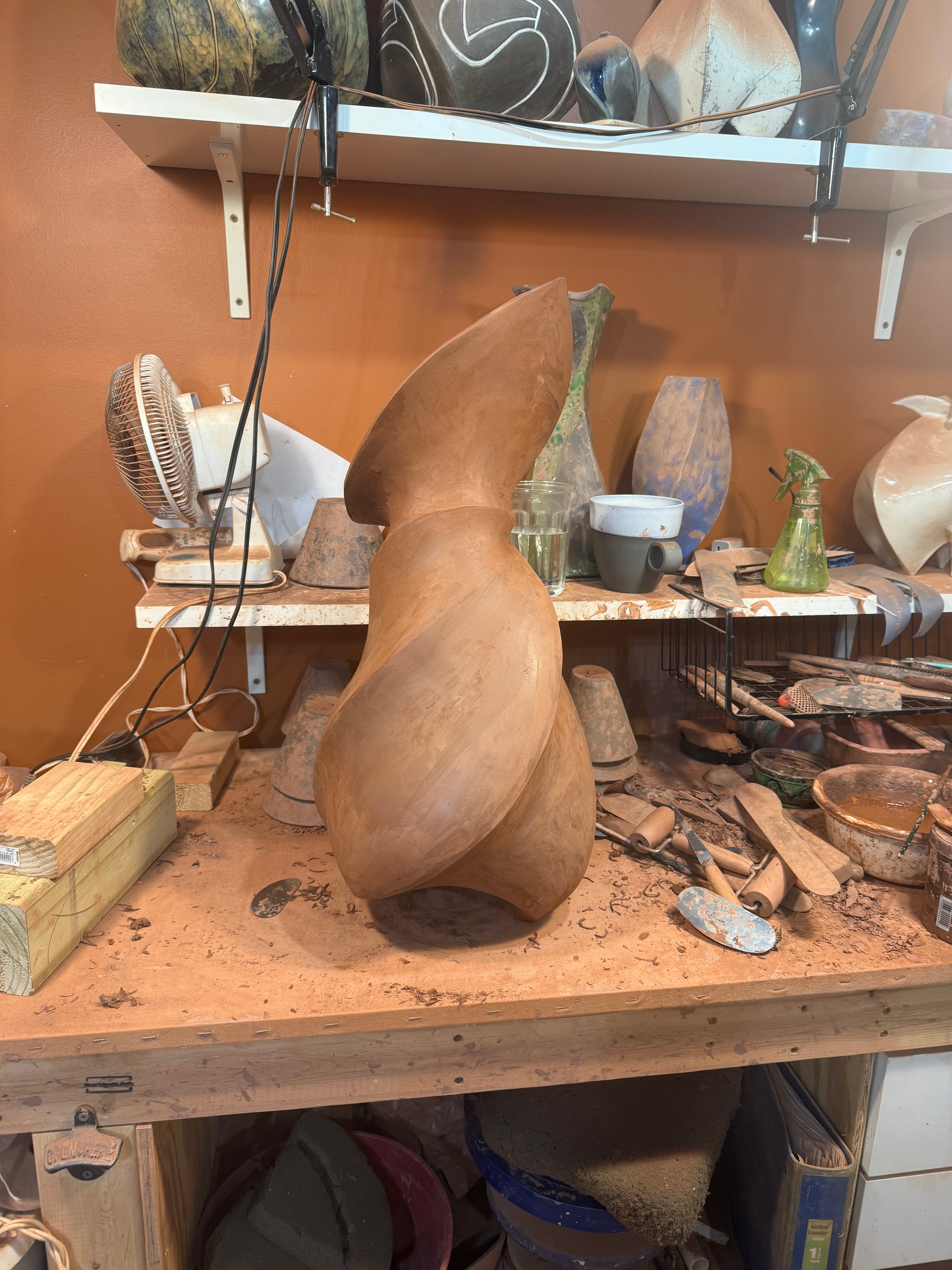
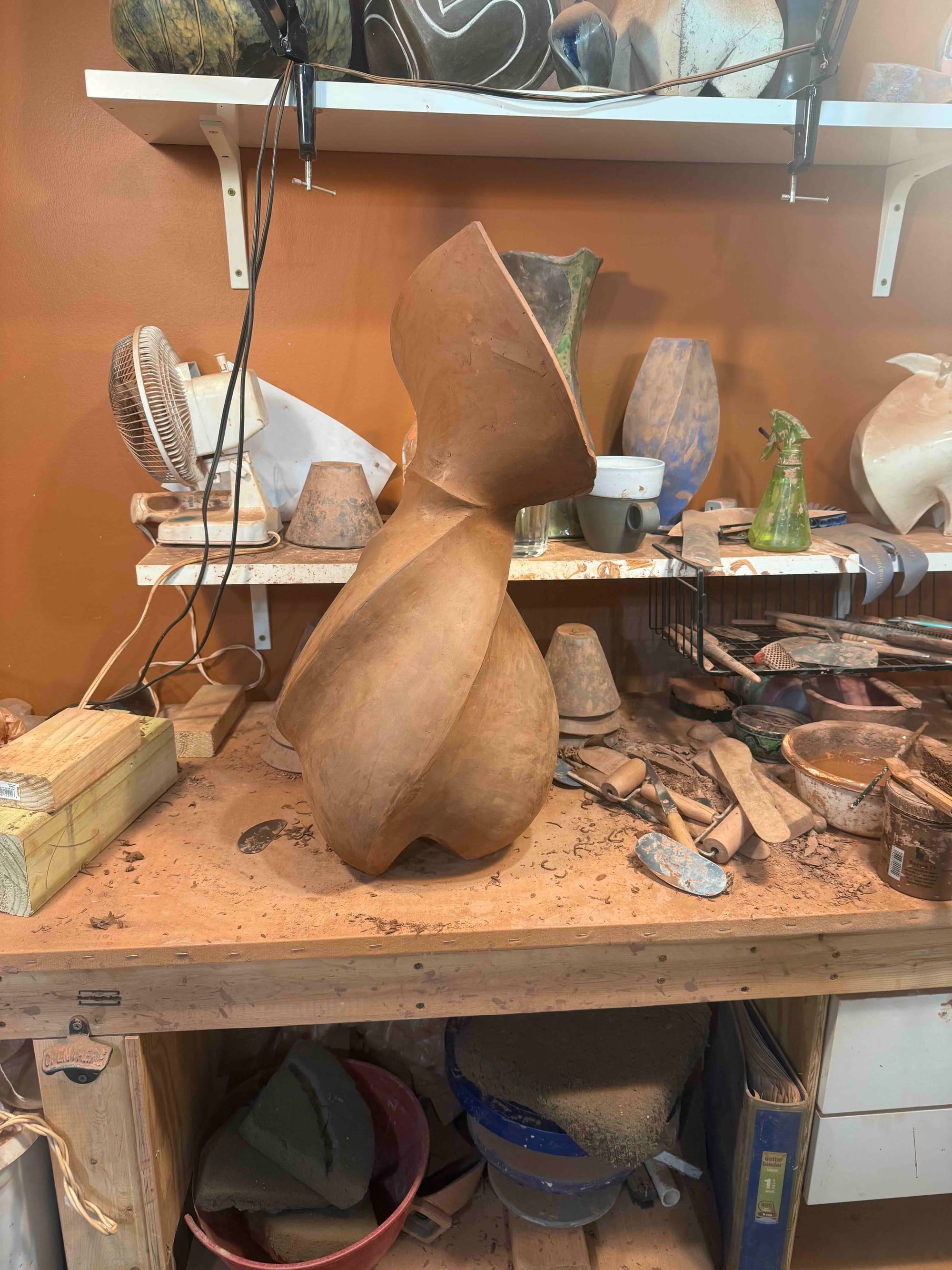
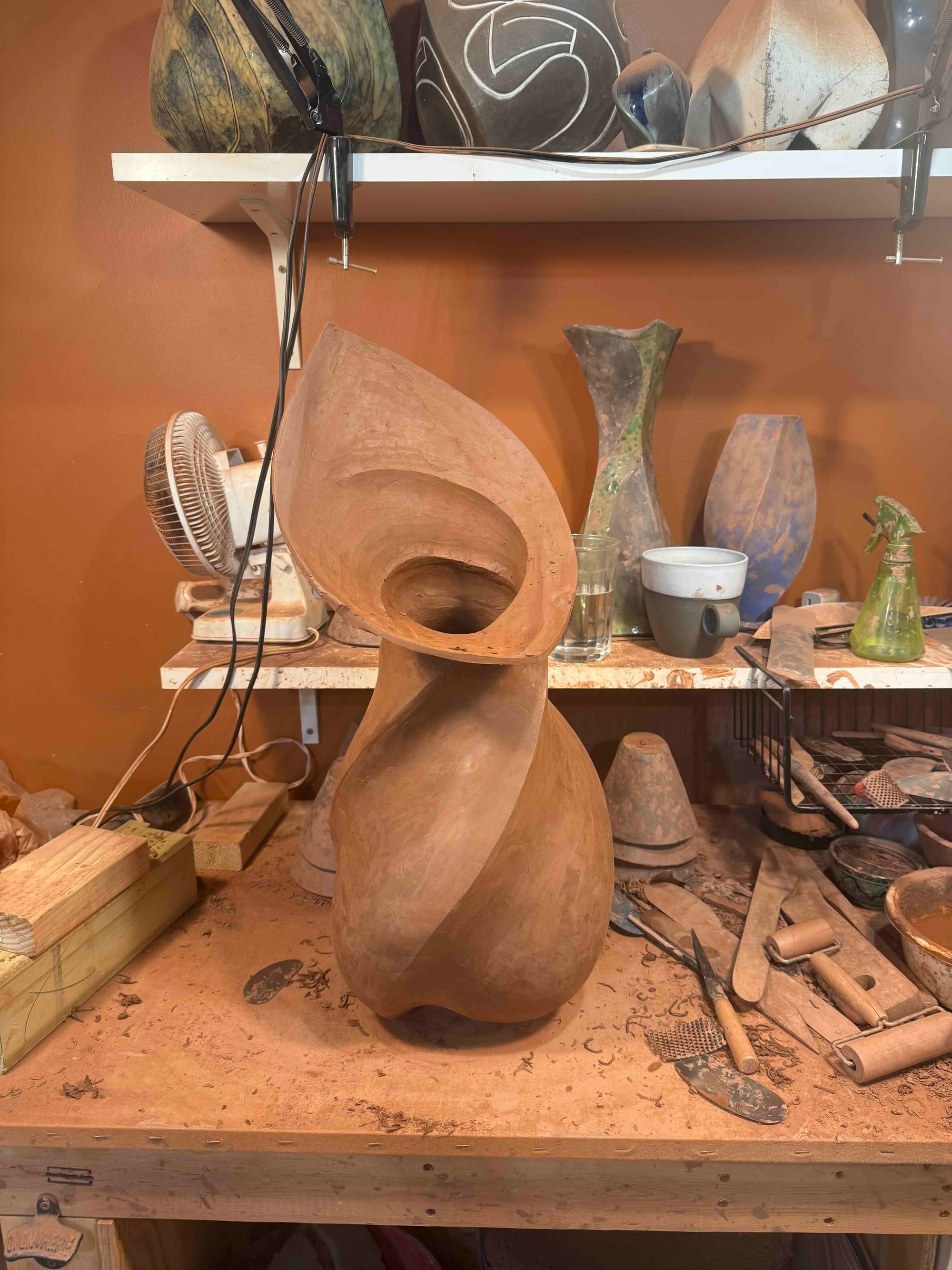
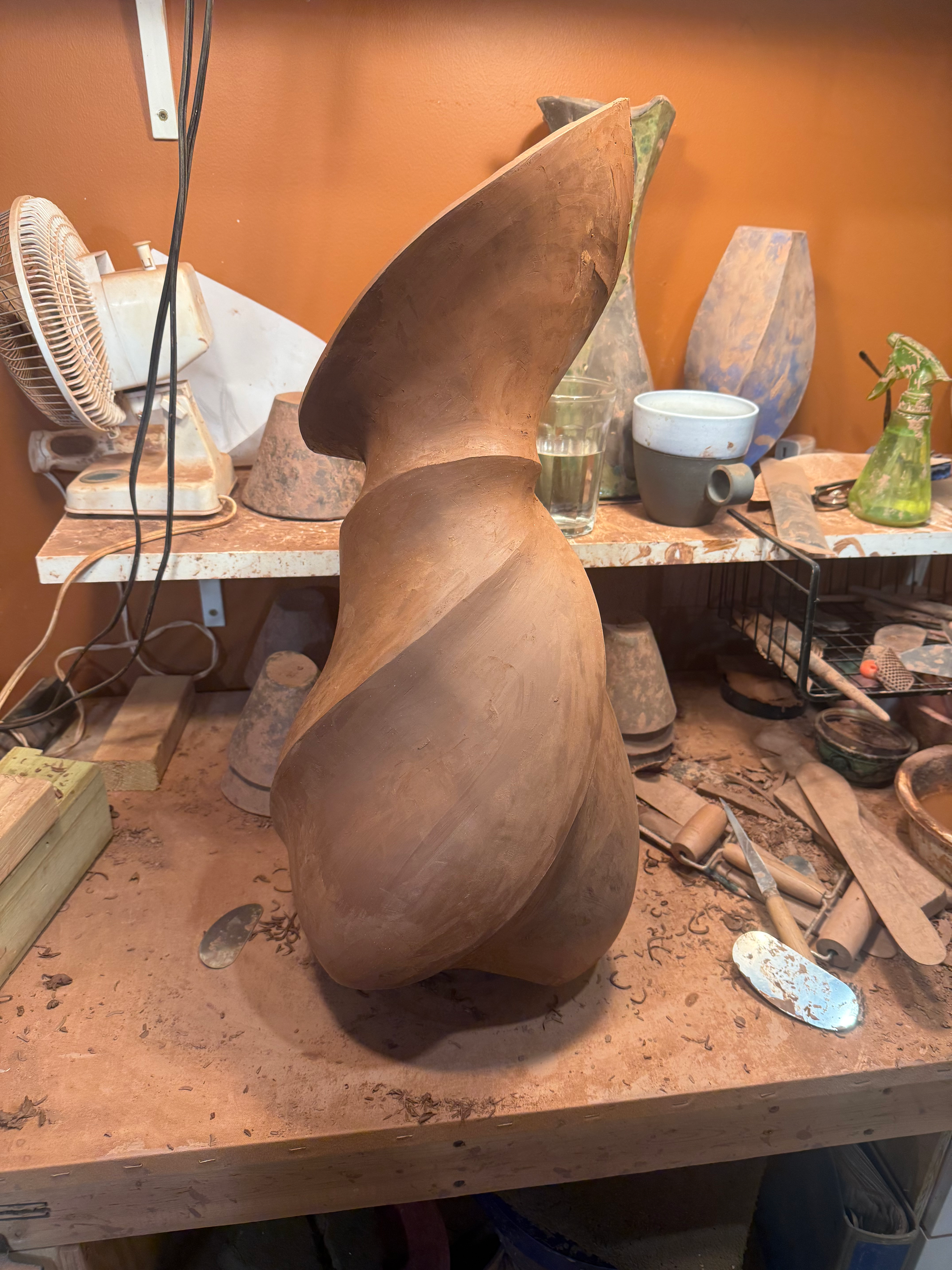
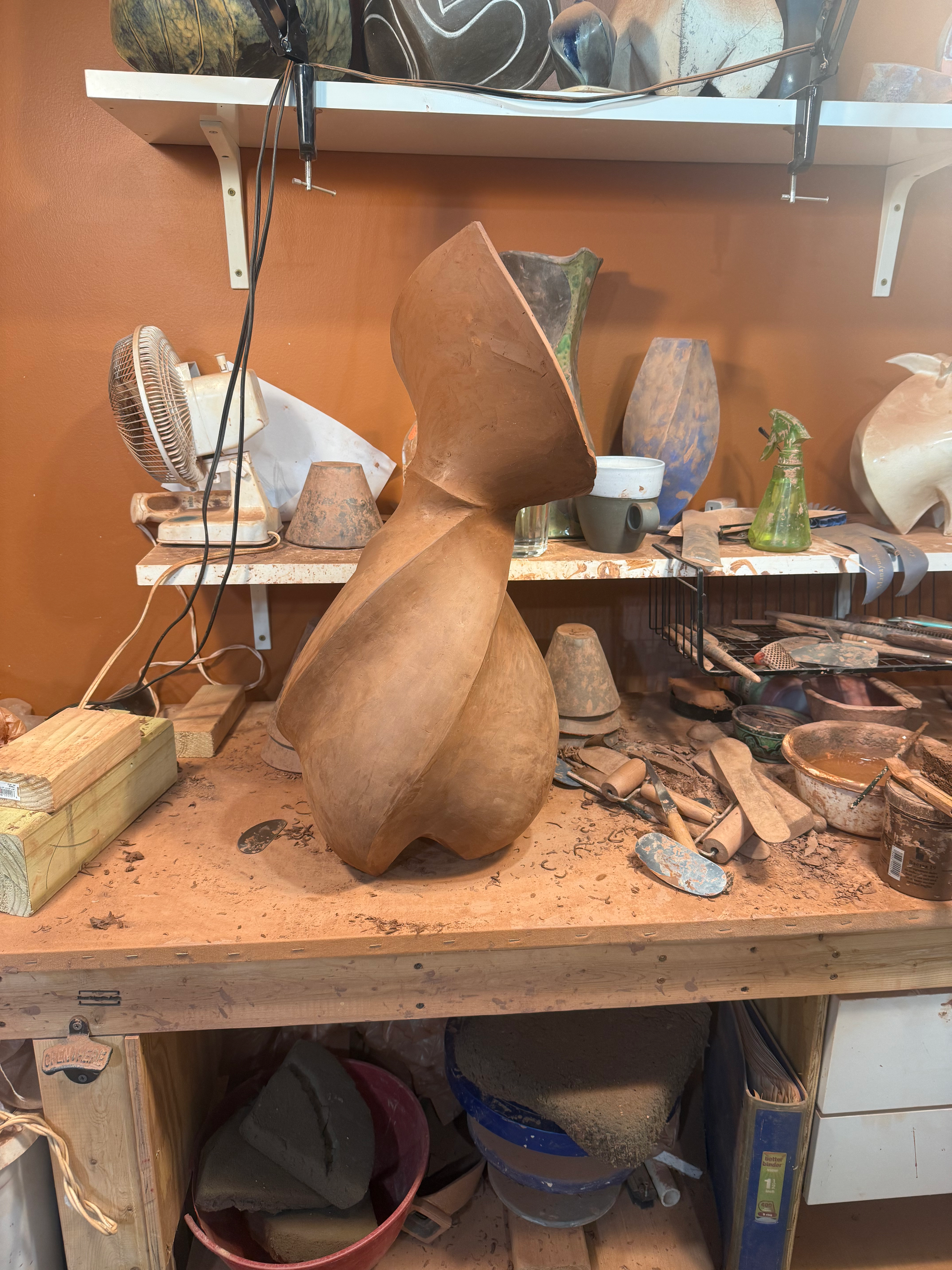
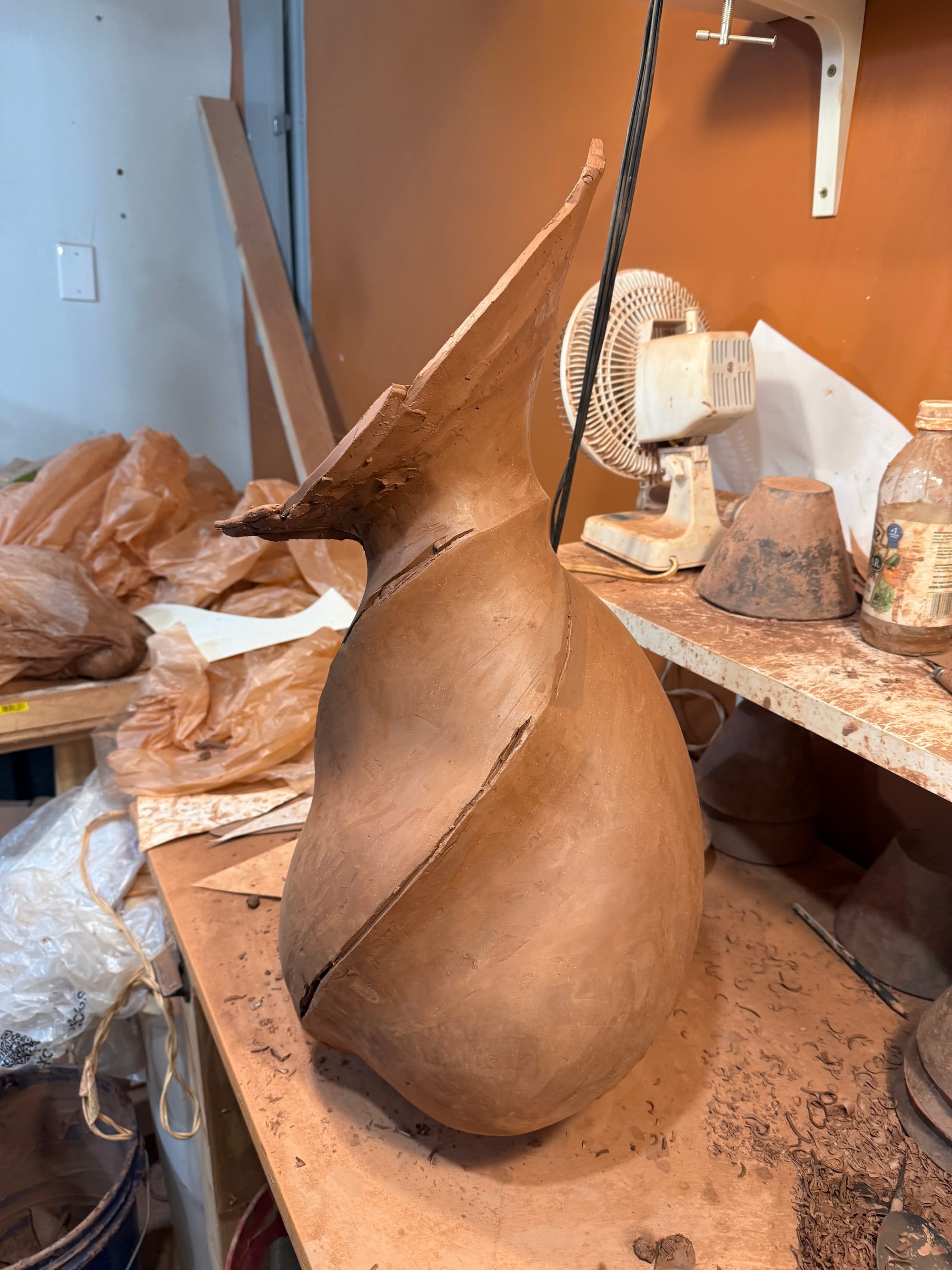
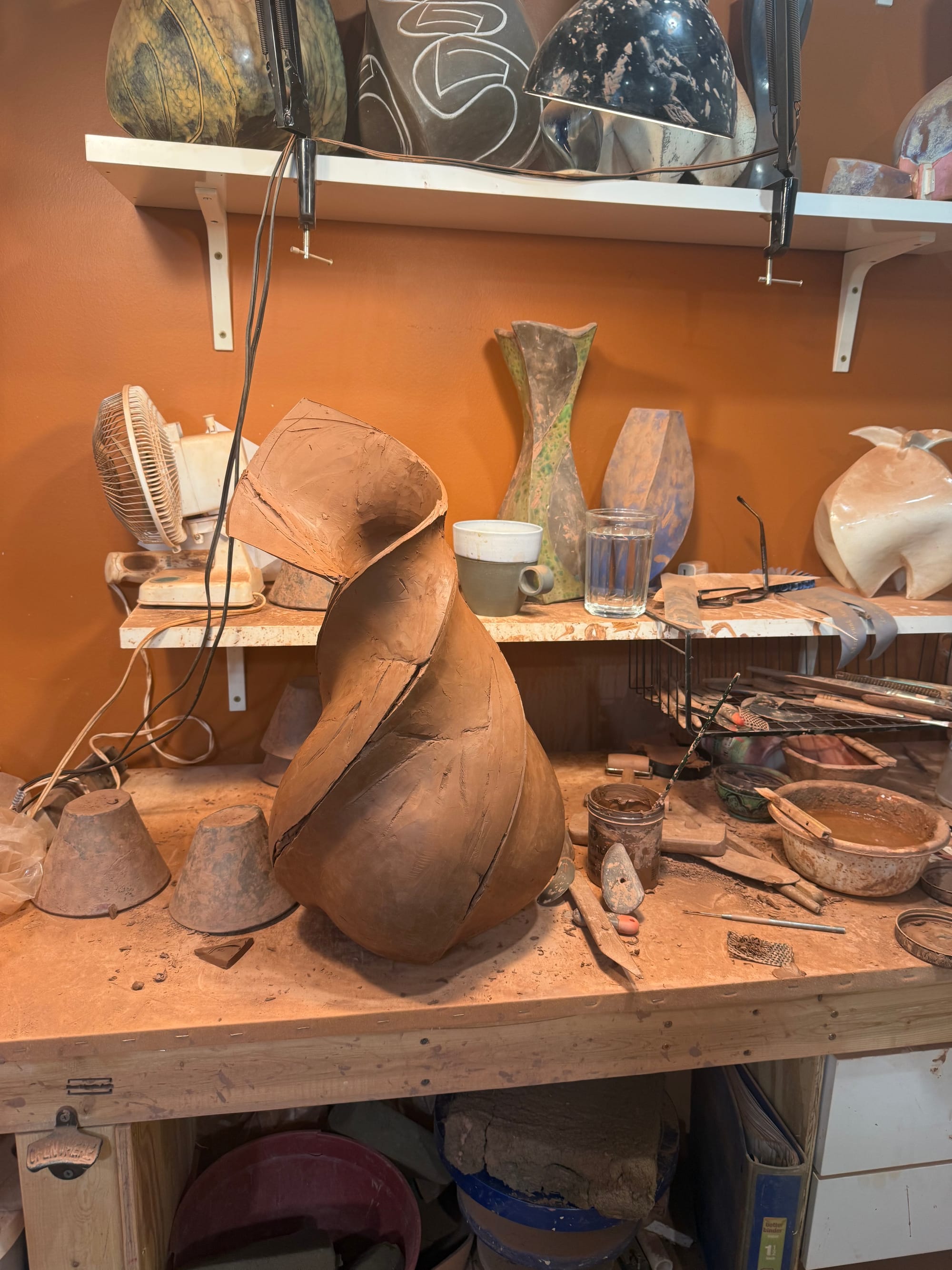
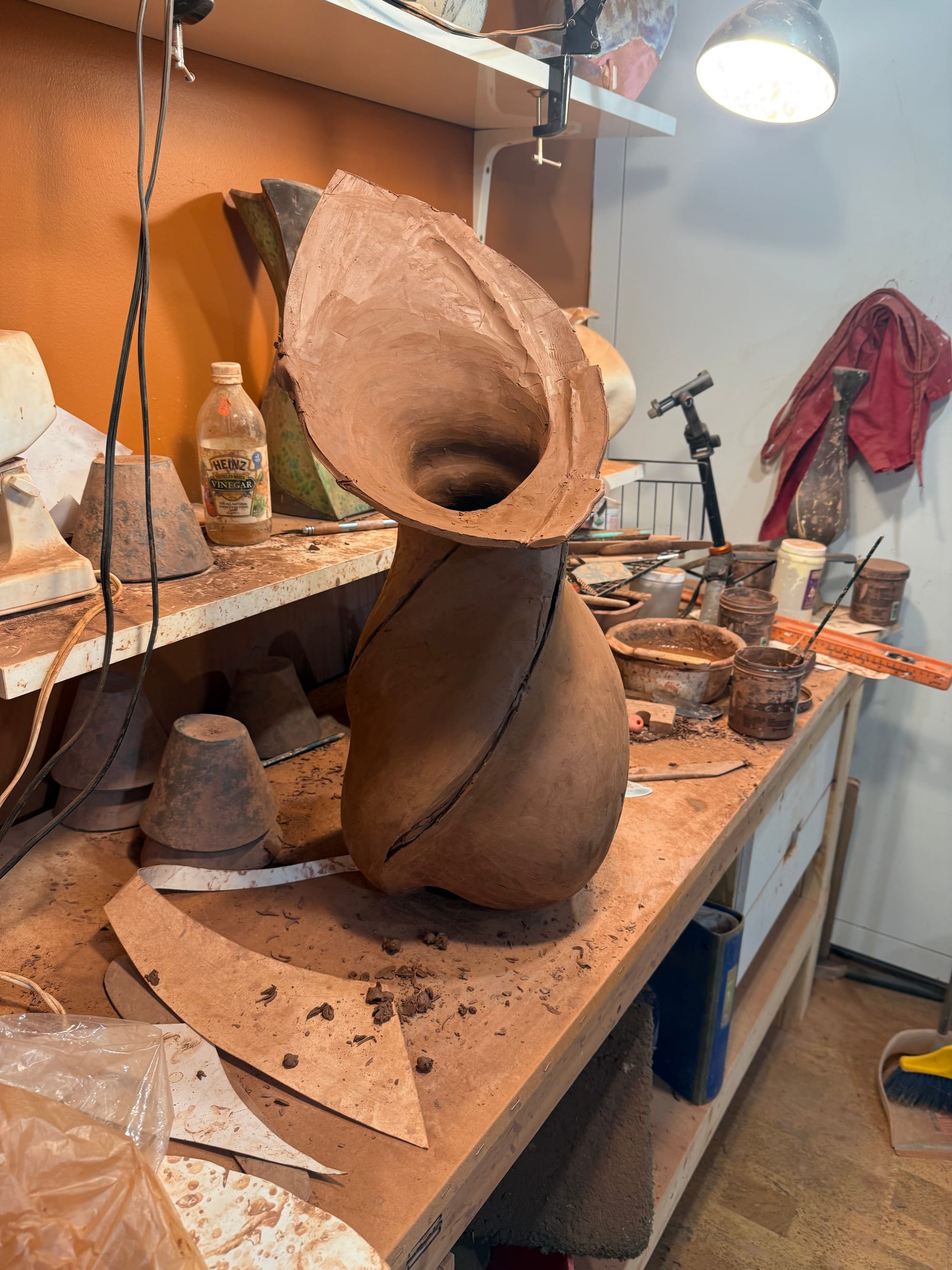
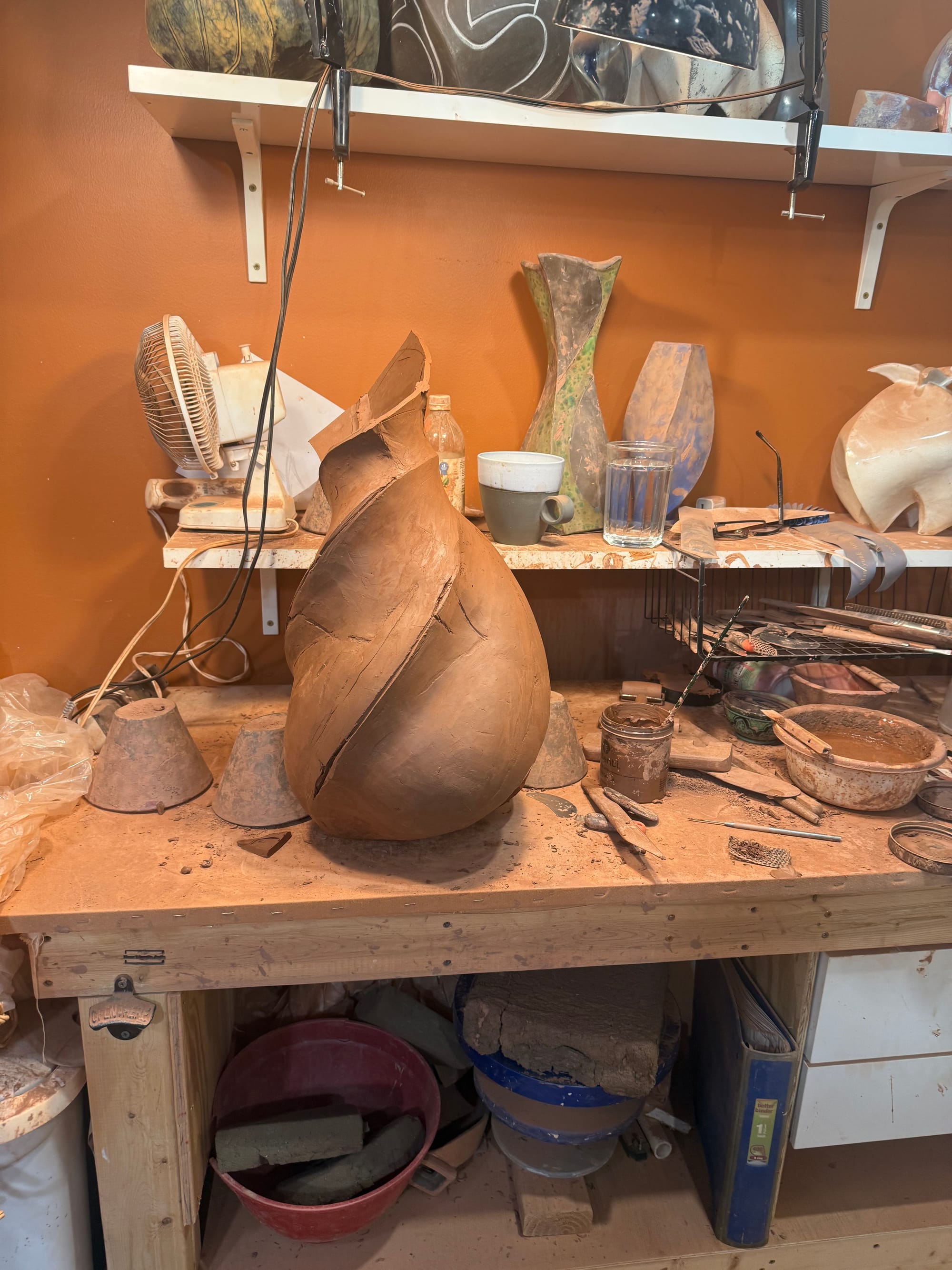
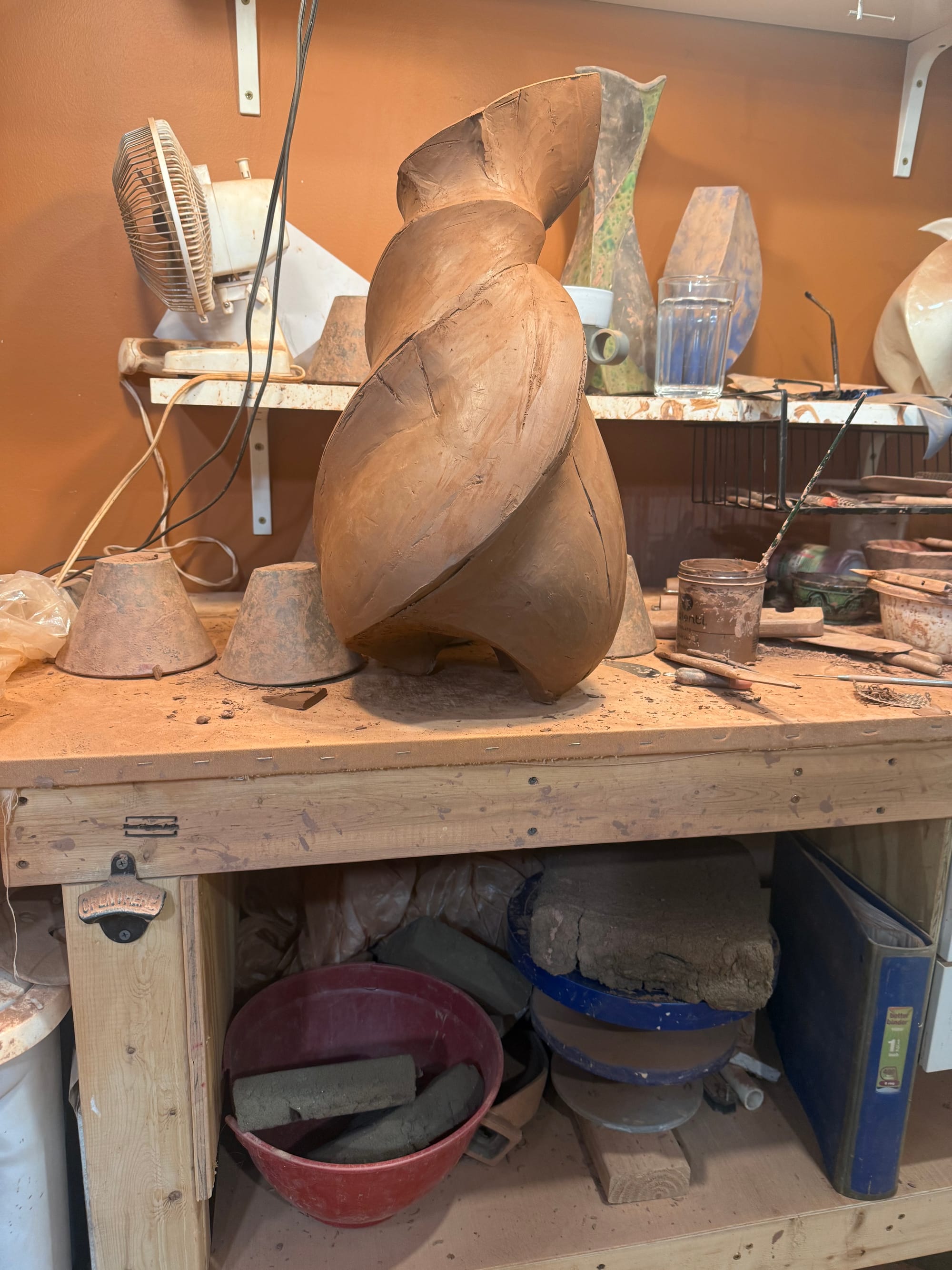
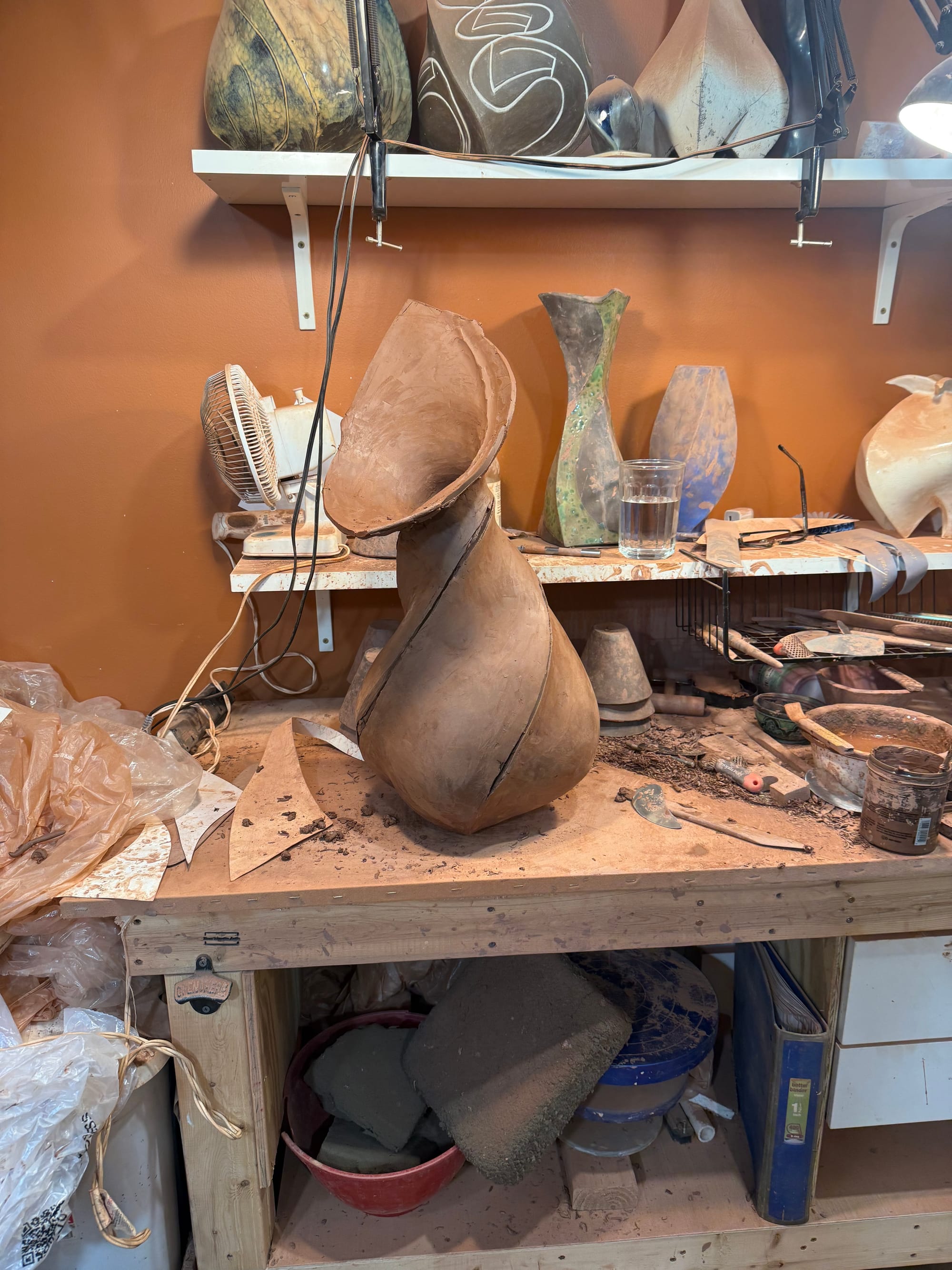
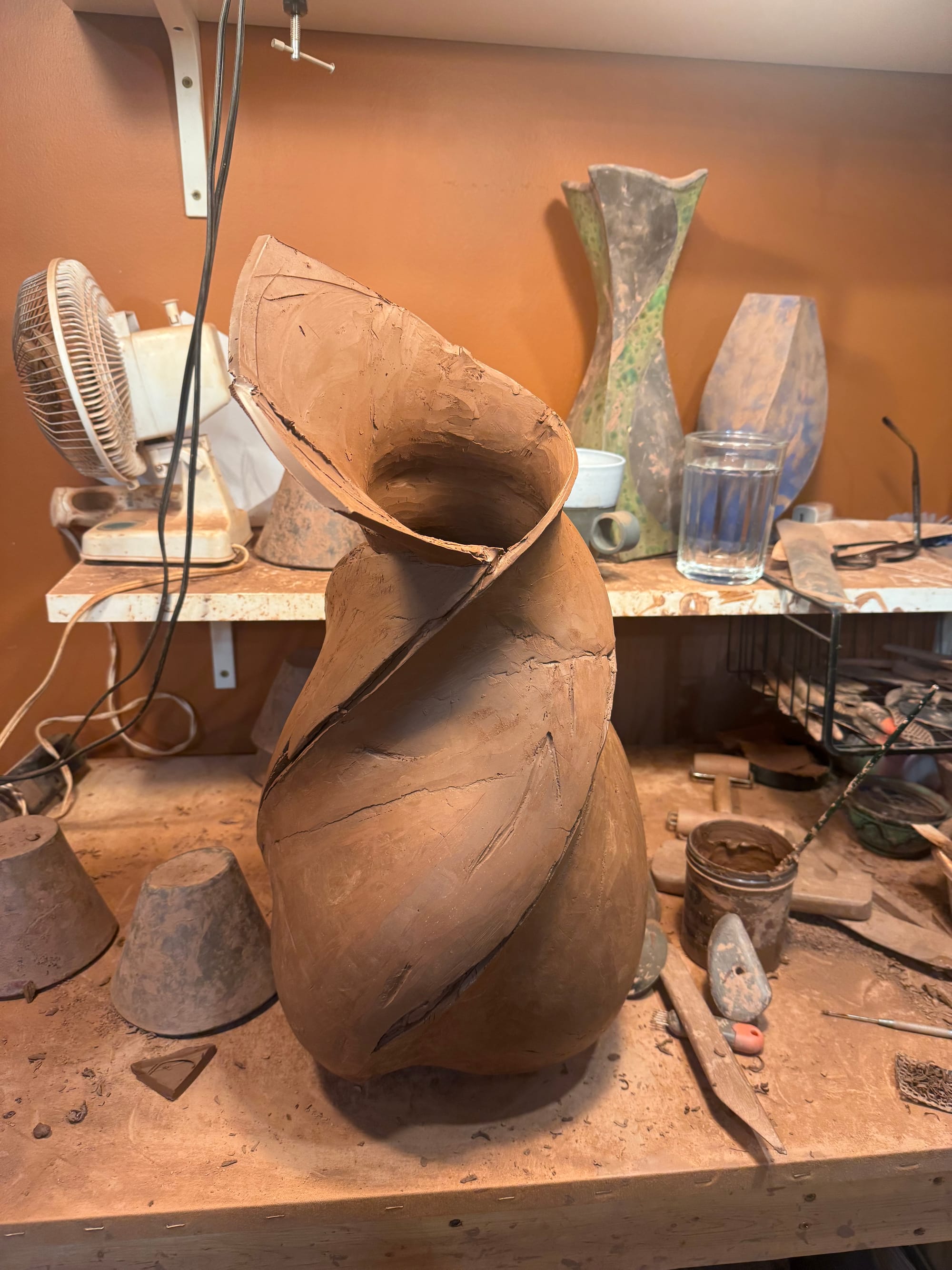
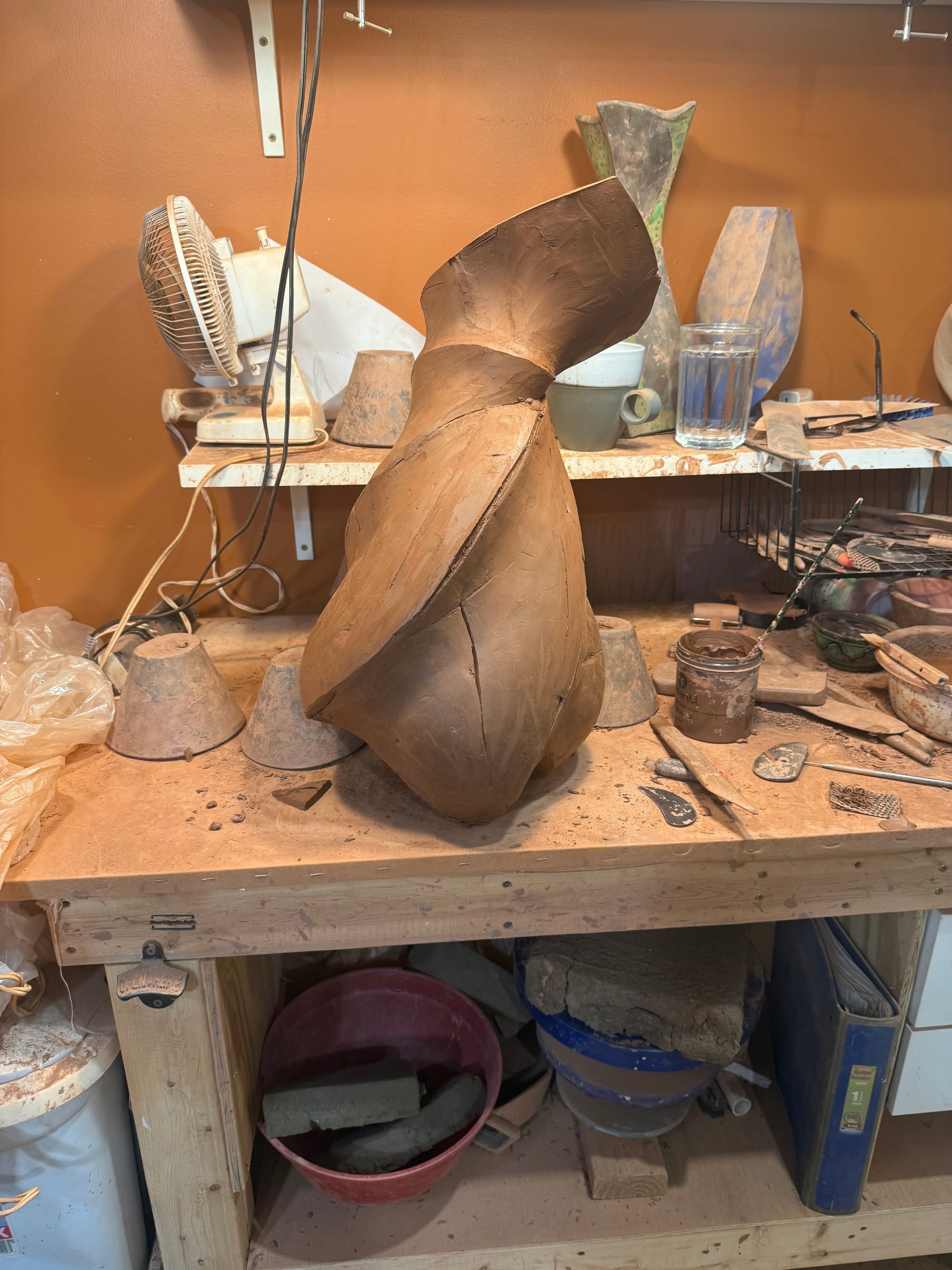
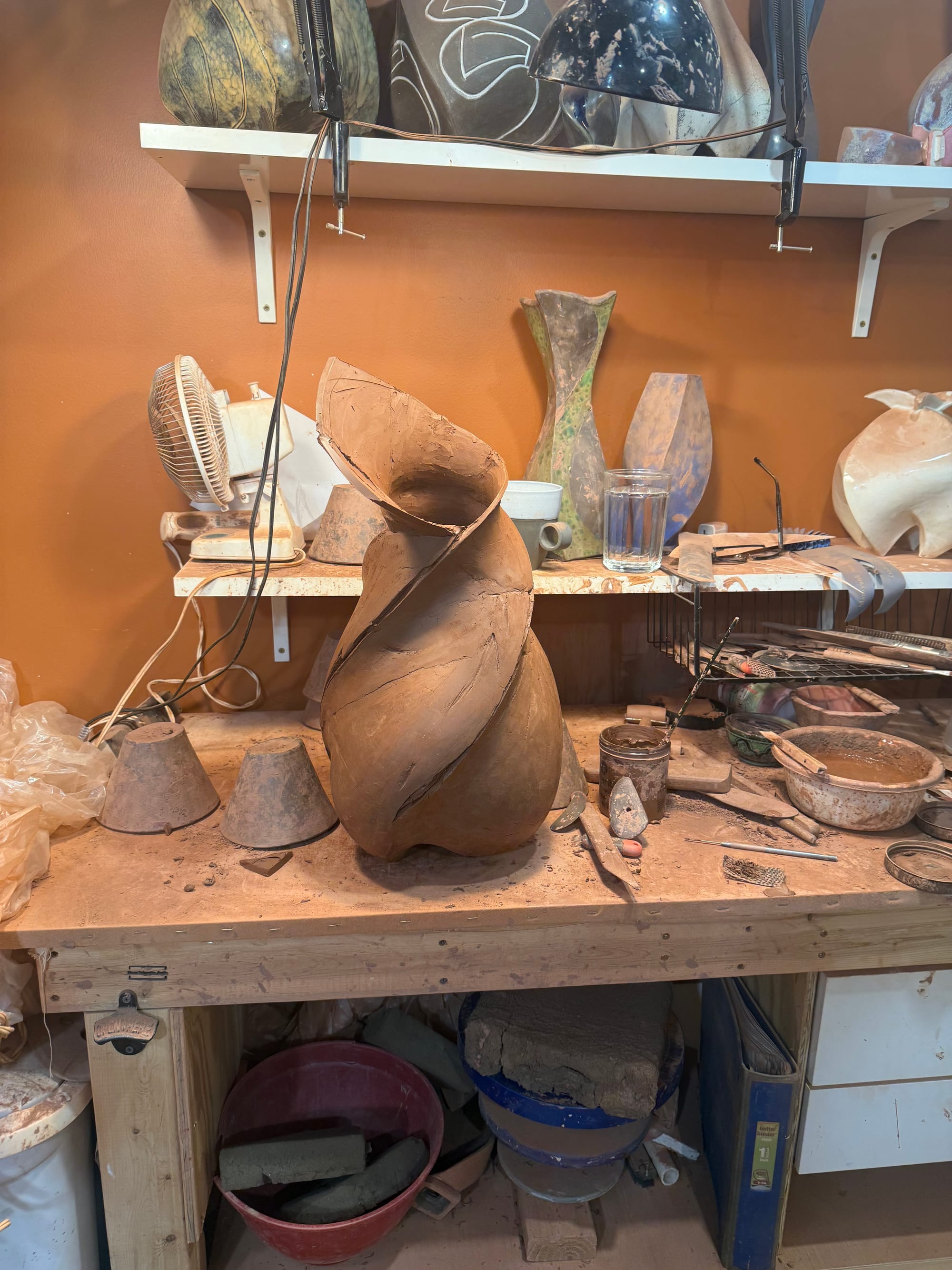
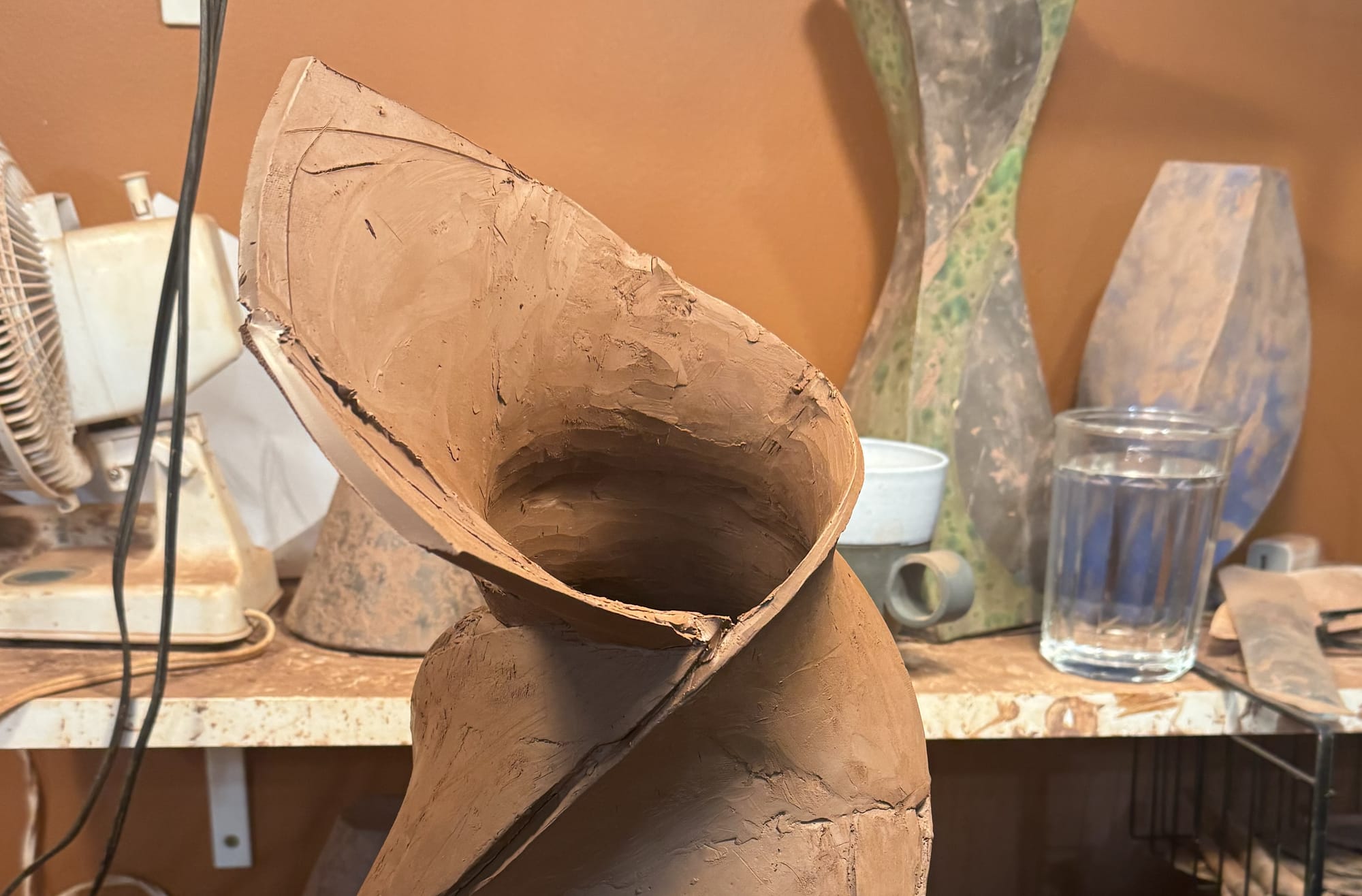
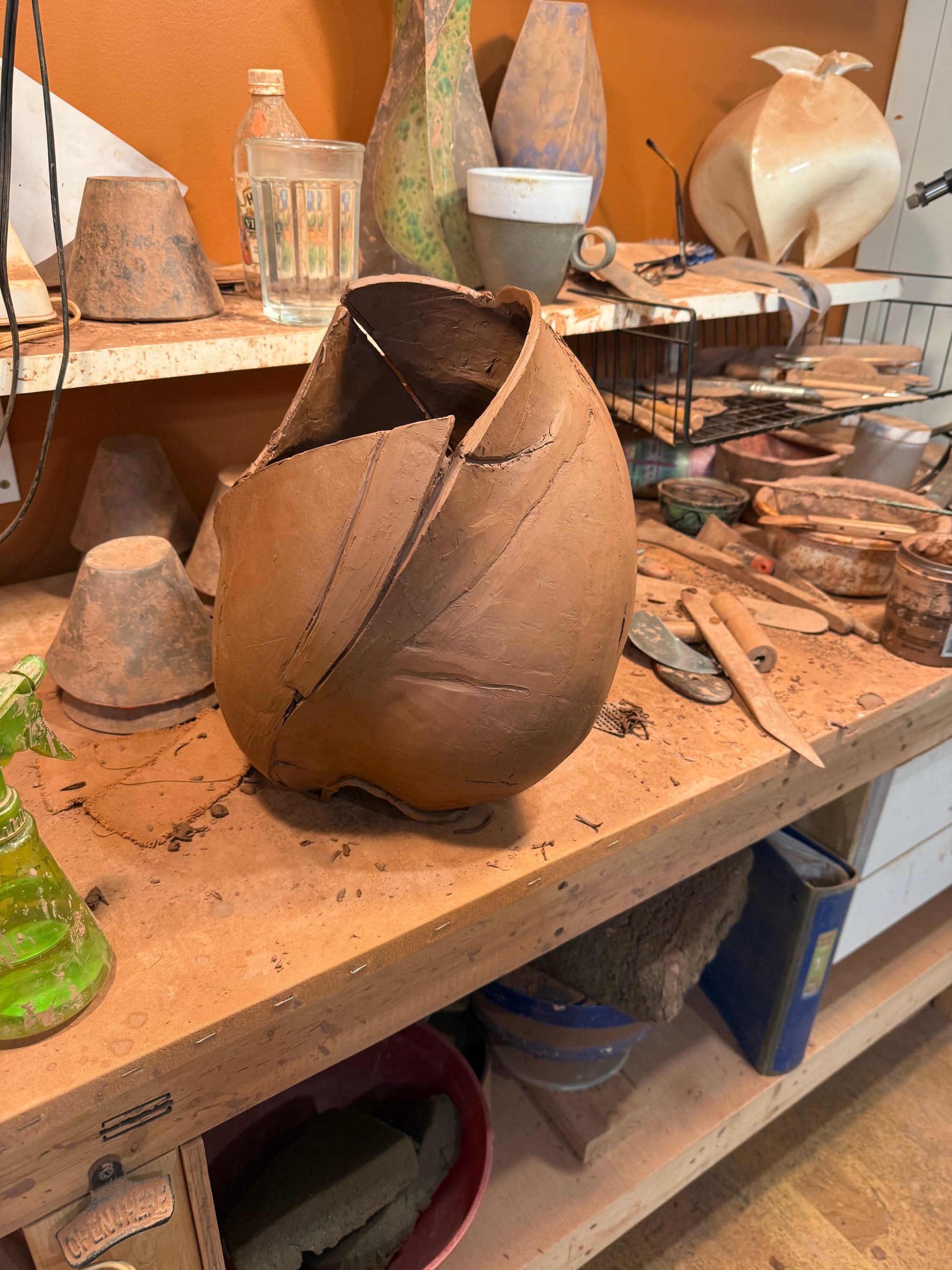
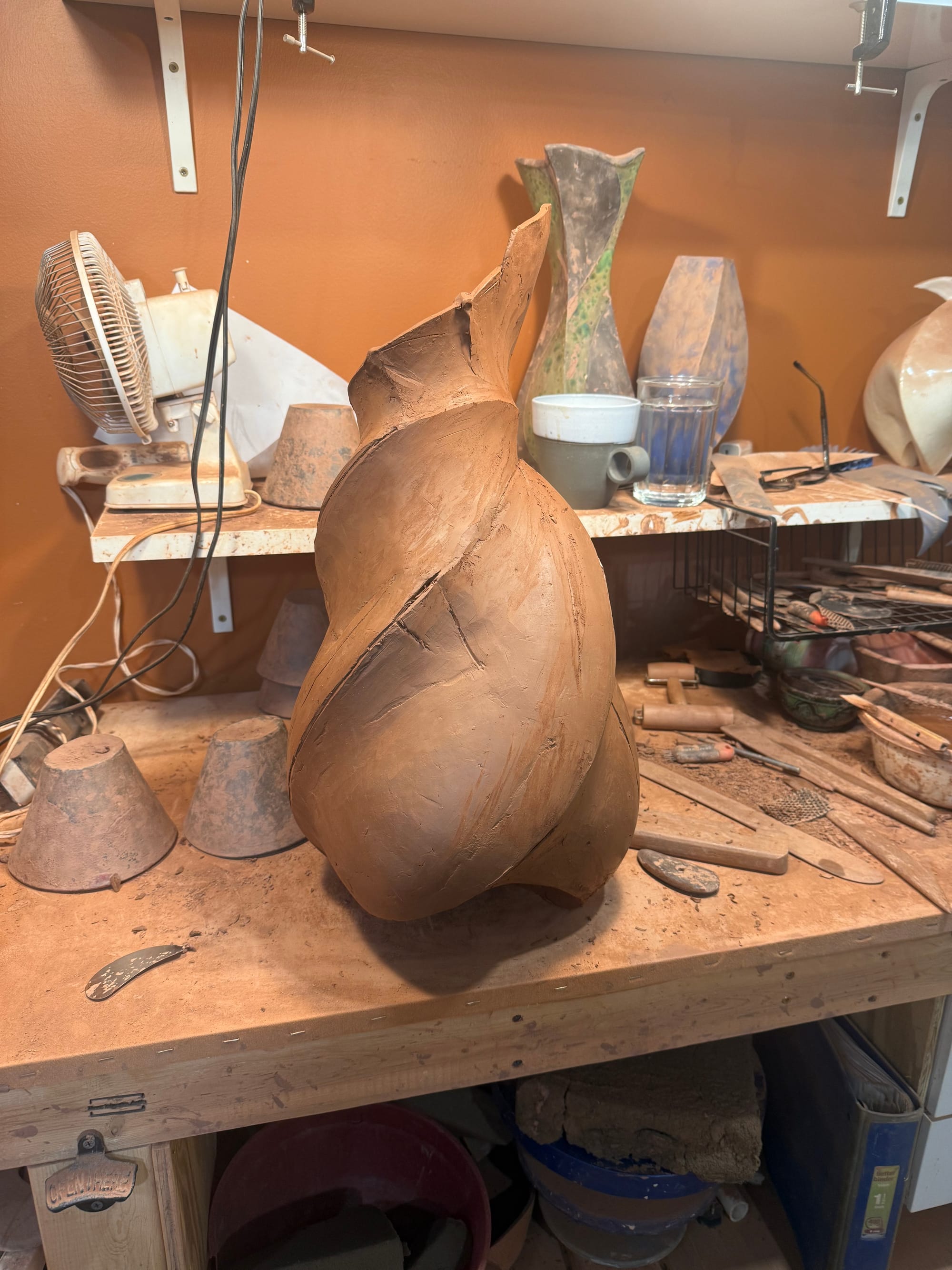
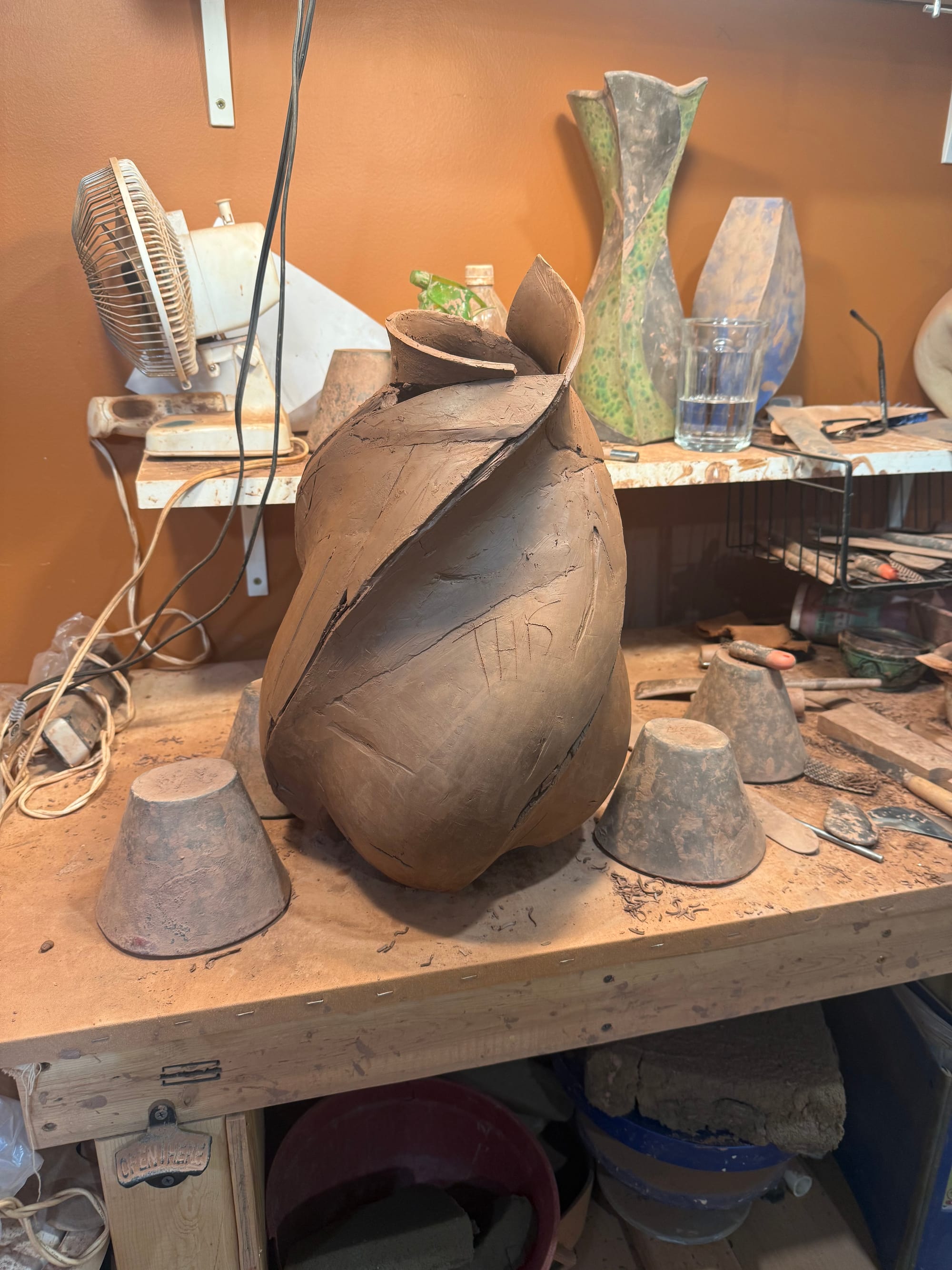
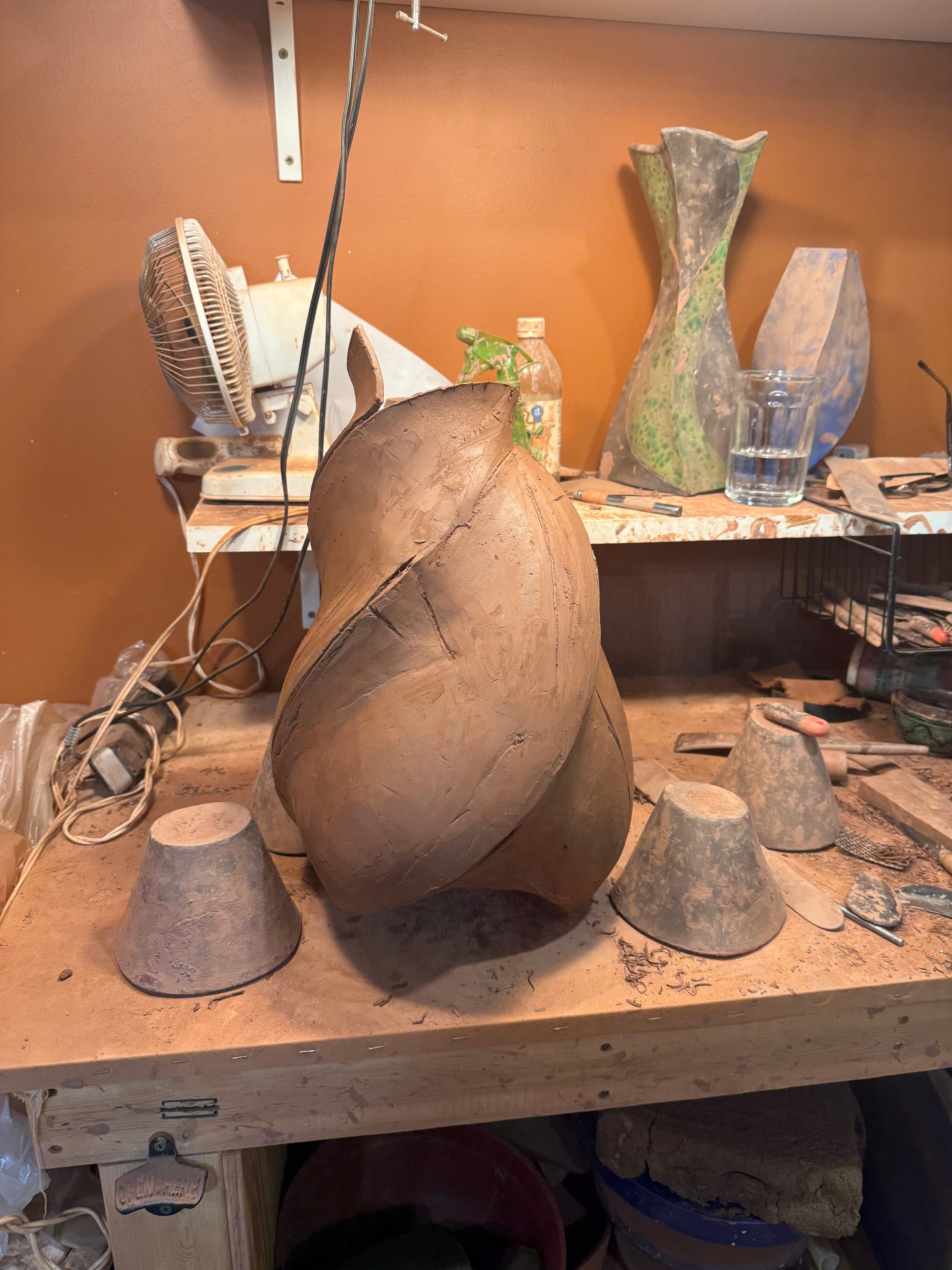
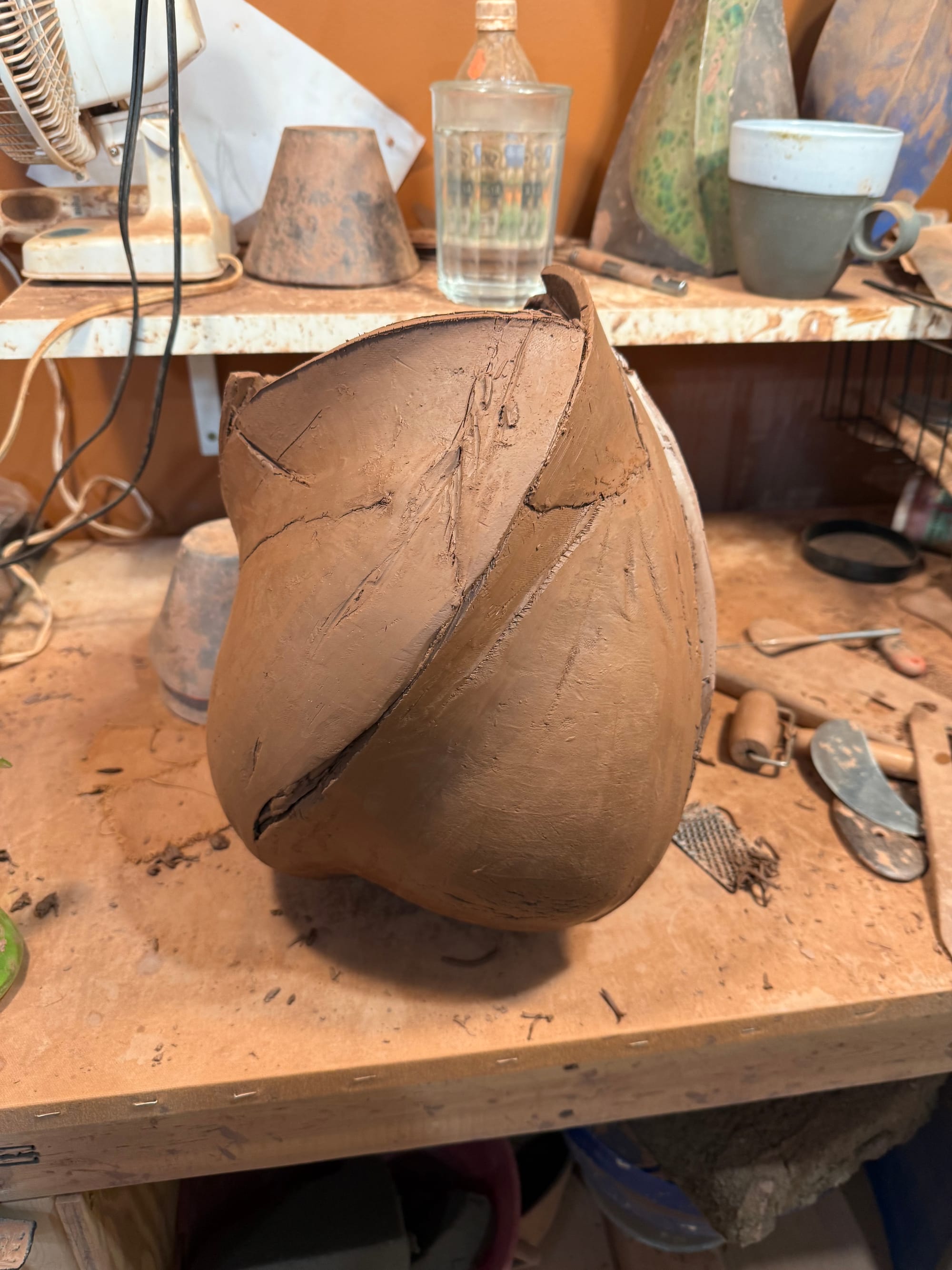
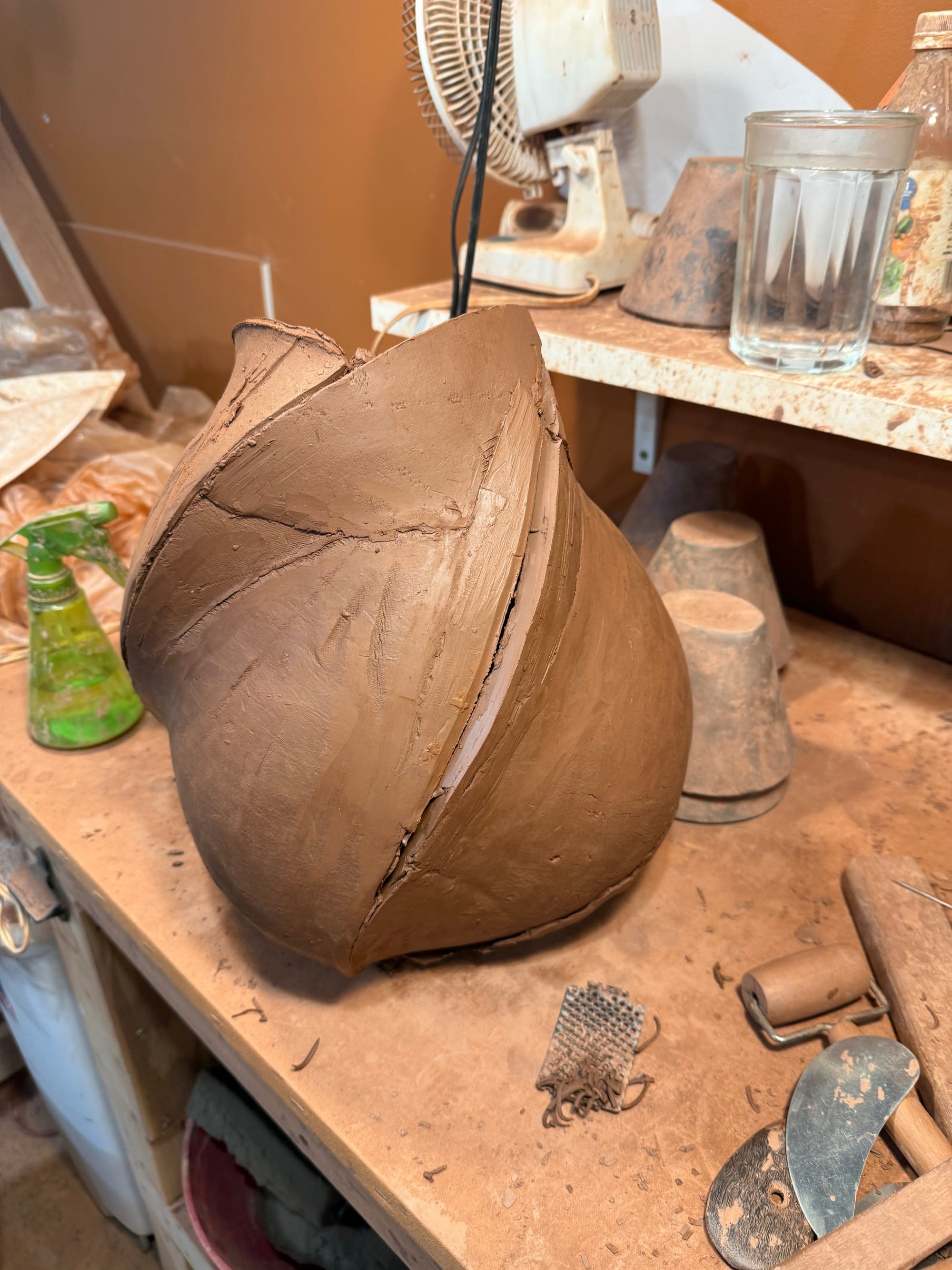
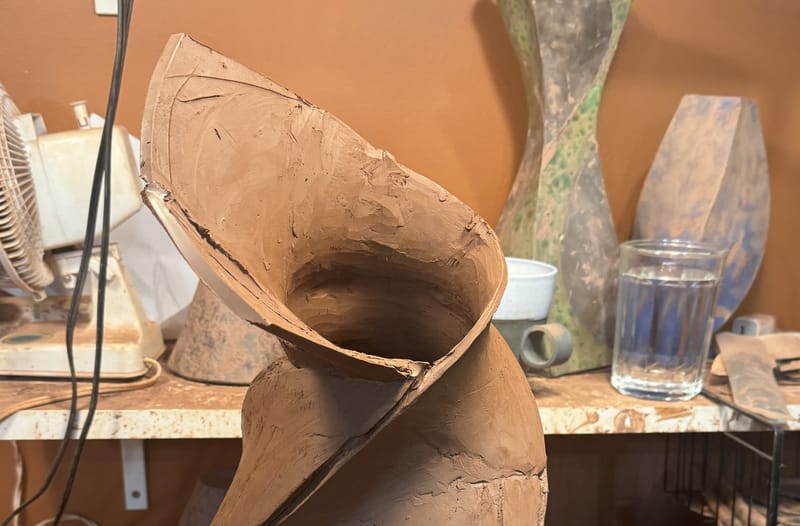
My work explores form through movement, tension, and balance. Starting with a basic form, I alter, distort, and reconfigure it to create a sense of instability and energy, often amplified by linear fields of color. Twisted and interrupted joins create shifting relationships that change with each vantage point.
Balancing functions as both a formal strategy and a way to explore the tension between stability and precarity, structure and improvisation, and sculpture and fine craft. I’m drawn to forms that occupy contradictory states, constantly adjusting their own equilibrium.
Implied anthropomorphism is central to my work. Through gesture, posture, and proportion, the forms suggest vulnerability, awkwardness, or personality without becoming explicitly figurative. They can appear to lean, strain, resist, or respond, creating a sense of presence while remaining abstract objects. Awkwardness and imperfection are intentional, giving the work a sense of tension and vitality.
By resisting resolution and fixed viewpoints, my sculptures invite an embodied encounter with forms that seem to be negotiating their own balance.
Balance is both a formal strategy and a way of thinking about lived experience. My sculptures move between stability and precarity, structure and improvisation, sculpture and craft, and the personal and professional. I’m drawn to forms that seem to be constantly adjusting themselves, never quite settling into place.
Implied anthropomorphism is integral to the work. Through proportion, gesture, posture, and balance, the sculptures can suggest vulnerability, personality, or even a kind of awkwardness without becoming figurative. Awkwardness and imperfection are intentional. I want the forms to feel alive while remaining objects, inviting a physical and open-ended encounter with them.

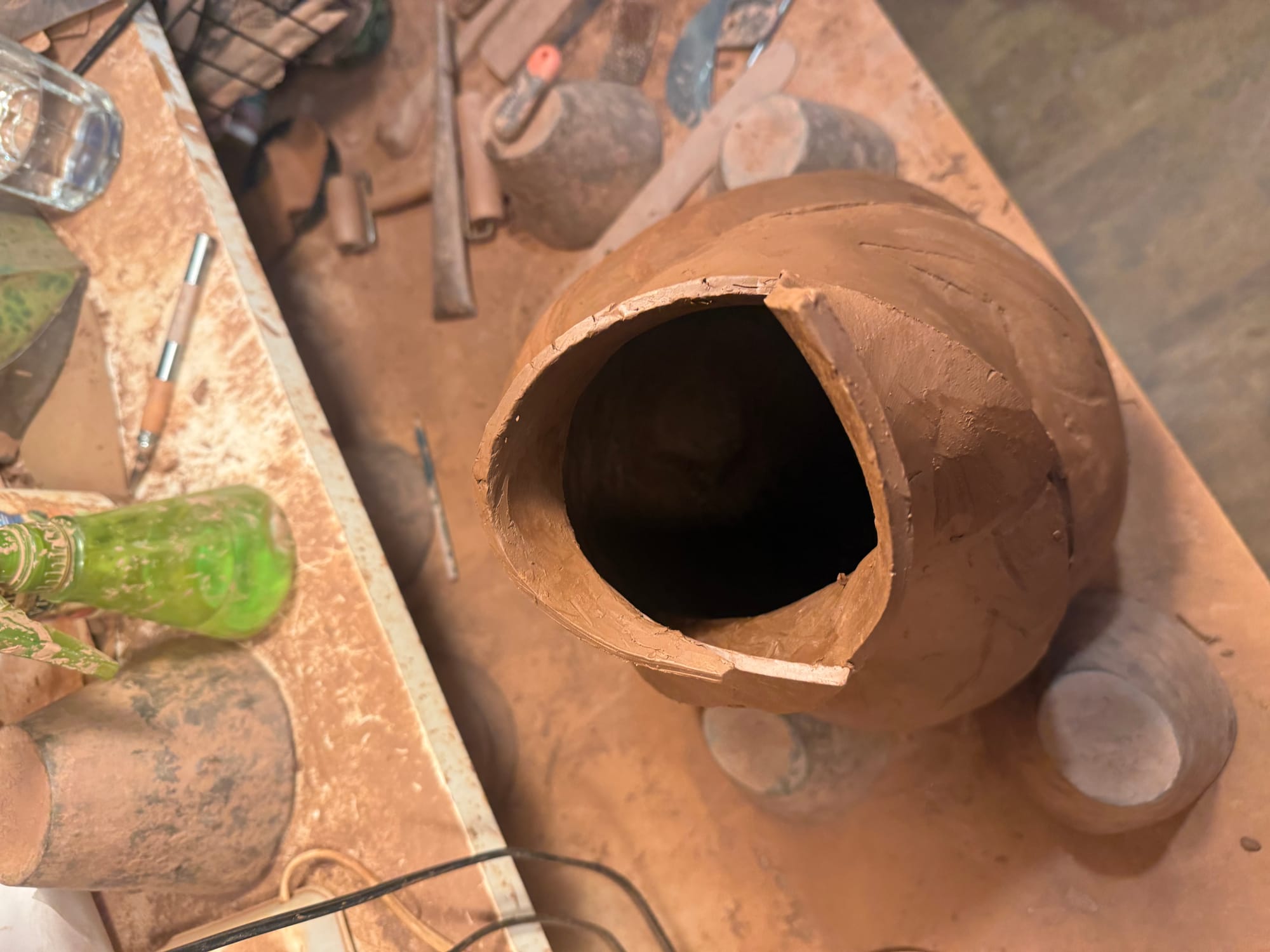
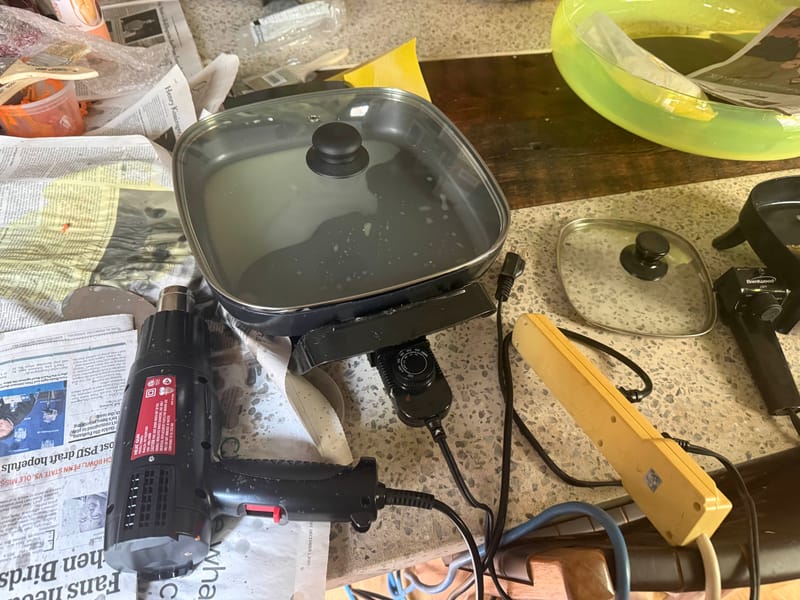
Process


Blog

It's been 8 months.
Read More
I do not like to brag, but...
Read More
Stressed clay, stressed artist!
Read More
I sing when I'm happy and studio = happy!
Read More
A weekday evening at the studio
Read More
This will be my attempt at writing my first blog. It'll be mostly studio related, with some, mostly-likely cantankerous, observations of life.
Read MoreContact
- Fishtown, Philadelphia, Pennsylvania, USA
- +1-215 280 7291
- peter.cunicelli@yahoo.com
- By Appointment
Thank you for your interest in my work. If you would like to be notified of what's happening with my work and studio practice, please leave your name and email address to be added to my mailing list. I would also appreciate a word or two regarding how you found me. I send emails sparingly.